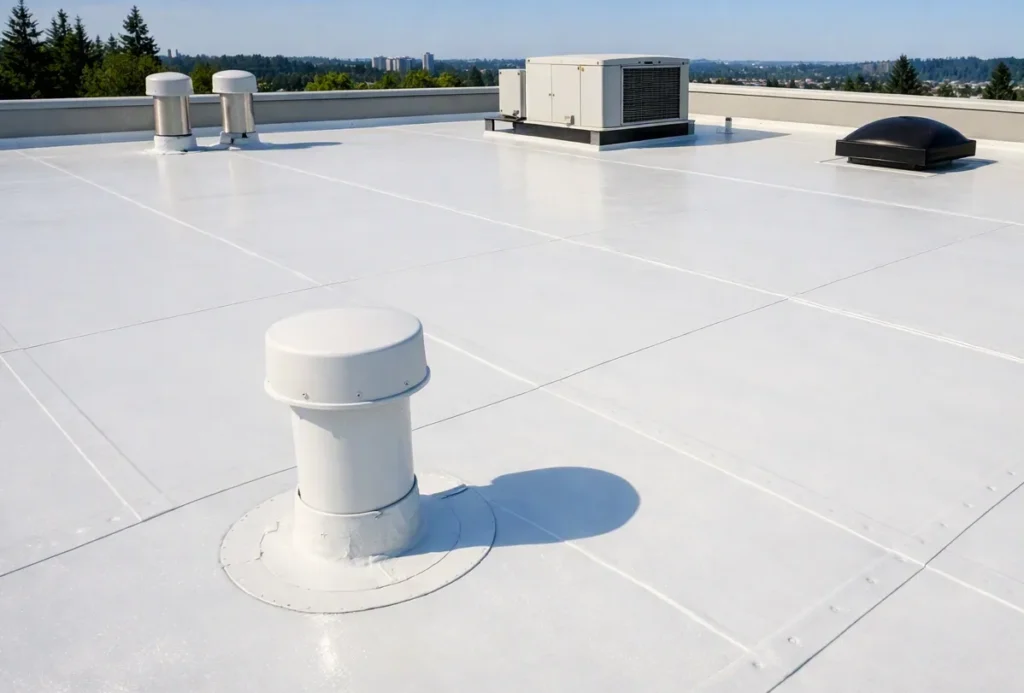
Managing a low-slope roof in Tacoma means dealing with persistent wet-season moisture. Rain tests every seam, flashing detail, drain, and rooftop penetration on a commercial building. Choosing the wrong system for the building’s use creates avoidable maintenance problems and premature leaks. Property managers need clear guidance from experienced flat roof specialists to compare materials based on the building, budget, and operating demands.
What Are the Different Types of Flat Roofs Used in Tacoma?
The main commercial low-slope roofing systems used in Tacoma include TPO, PVC, EPDM, built-up roofing, and modified bitumen. Each has different strengths involving seam construction, chemical exposure, UV performance, puncture resistance, repairability, and installation cost. All systems still depend on proper drainage and professional installation.
Making the right choice requires more than selecting the most popular membrane. You must match the roof system to the building structure, insulation plan, rooftop equipment, maintenance traffic, exhaust exposure, and long-term budget.
The Commercial Flat Roof Material Matrix
| Material Type | Primary Benefit | Best Application |
| TPO (Thermoplastic Polyolefin) | Reflective surface and heat-welded seams | Warehouses, retail buildings, and offices |
| PVC (Polyvinyl Chloride) | Strong chemical and grease resistance | Restaurants, manufacturing, and industrial facilities |
| EPDM (Rubber Roofing) | Flexible membrane with proven weather resistance | Offices, warehouses, and simple low-slope roofs |
| Built-Up Roofing (BUR) | Multiple reinforced layers and strong redundancy | Buildings needing durable, traffic-resistant assemblies |
Why Single-Ply Membranes Dominate the Pacific Northwest
Older built-up and modified-bitumen roofs remain in service, but many commercial owners now choose single-ply membranes such as TPO, PVC, and EPDM. These systems cover large areas with fewer field layers and use factory-produced sheets that simplify installation. Their performance still depends on secure seams, flashing, drainage, and careful detailing around penetrations.
Each membrane brings specific tradeoffs. TPO is popular because it combines reflective surfaces, heat-welded seams, and competitive installation costs. PVC generally provides stronger resistance to grease and aggressive chemicals, while EPDM offers flexibility and a long record of weather performance. True flat roof specialists evaluate the building’s use and existing roof assembly before recommending a material.
The Threat of Thermal Shock on Aging Roofs
Western Washington roofs experience long wet periods, summer UV exposure, temperature changes, and occasional freezing conditions. These stresses work alongside ponding water, poor drainage, seam movement, rooftop traffic, and age. Over time, an aging membrane can lose flexibility, develop cracks, or experience seam and flashing failures.
Different membranes respond to weather in different ways. TPO and PVC use heat-welded seams, while EPDM commonly uses adhesive, tape, or bonded flashing details. If a seam or penetration fails, water can enter the roof assembly and saturate insulation. Surface patches may solve an isolated defect, but widespread deterioration calls for a broader repair or replacement plan. Experienced flat roof specialists consider membrane performance, drainage, and detail quality together.
How Do You Evaluate Your Flat Roofing Options?
You evaluate flat roofing options by analyzing the building’s physical demands, including rooftop traffic, exhaust, chemical exposure, drainage, roof slope, insulation, and service access. Local flat roof specialists use this information to match the roof assembly to the building’s daily operations.
Ignoring these factors to save money upfront creates avoidable repair costs. Restaurant grease and harsh exhaust favor a chemically resistant system such as PVC, while heavy HVAC traffic requires designated walk pads regardless of membrane type. A warehouse with limited rooftop activity may benefit from TPO or EPDM, depending on its design and energy goals. Matching the material to the property protects the roof and improves long-term budget control.
Related Articles:
- TPO vs Modified Bitumen: Best Flat Roof System in Tacoma
- Common Issues With Tacoma Flat Roofs and How to Fix Them
Secure Your Property With Local Tacoma Experts
Upgrading a large commercial building is a serious financial commitment. You need a weather-tight system designed for the harsh realities of the Pacific Northwest. Relying on guesswork leaves your inventory, equipment, and paying tenants completely exposed to the elements. Smart planning keeps your business running smoothly.
Fields Roof Service builds strong, reliable roofs for businesses across Western Washington. Our experienced crews operate as true flat roof specialists, evaluating your property to recommend the most durable material for your specific needs. We manage the entire installation process smoothly, keeping your daily operations open and secure.
Schedule a thorough structural inspection today to lock out the rain and protect your investment.