
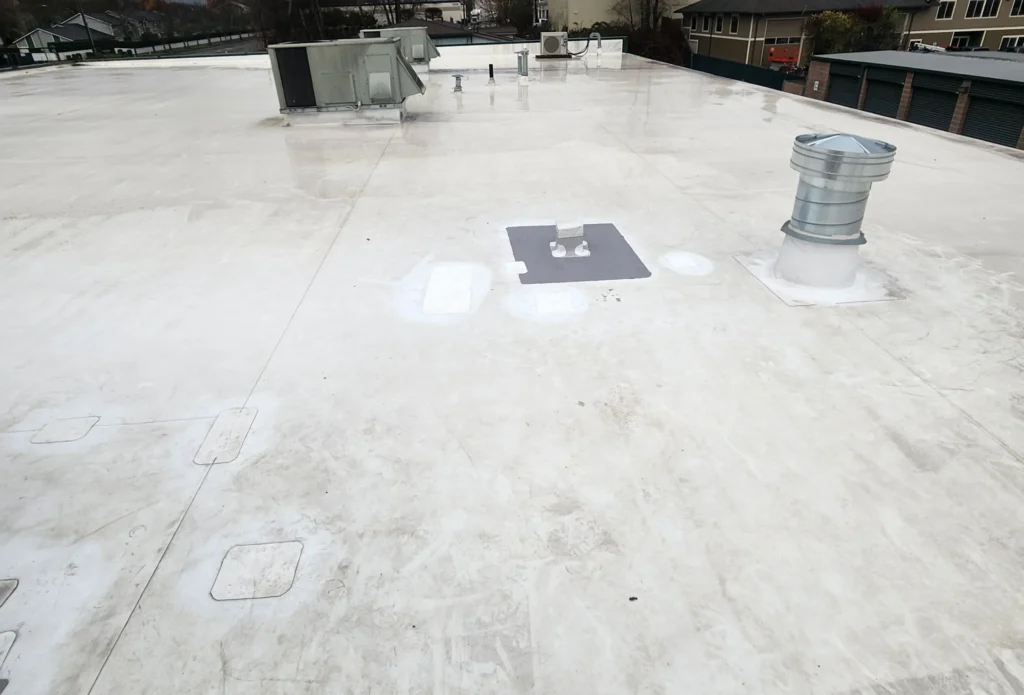
Summer heat in Washington can stress commercial roofing materials, while autumn often brings heavier rainfall and falling debris. If drains or scuppers become obstructed, water may collect on a low-slope roof instead of leaving through the designed drainage system. Scheduling proper Bellevue roof maintenance now can reduce the risk of leaks, material damage, and excessive roof loading before fall storms intensify.
How Do Bellevue Facility Managers Fix Flat Roof Ponding Water Before Autumn?
Facility managers address ponding by clearing blocked roof drains and scuppers, checking the roof’s slope and condition, and arranging professional repairs when needed. If the deck or existing roof design does not drain adequately, contractors may use tapered insulation, crickets, saddles, or another compatible drainage solution. They also document recurring puddles and monitor whether water remains after rainfall.
Standing water that remains on a commercial low-slope roof for more than 48 hours after rain, during conditions conducive to drying, indicates a drainage concern that deserves evaluation. The cause may be debris, a blocked outlet, localized deflection, inadequate slope, or another roof-system problem. Clearing the drains before November matters, but fixing the underlying cause protects the building.
Commercial Roof 48-Hour Ponding Mitigation Protocol
Property managers should act promptly when water stops draining, but correcting persistent ponding requires a qualified commercial roofing crew. The following protocol helps address common causes safely before heavy November storms arrive.
1. Clear the Surface Drains and Scuppers
A low-slope roof relies on internal drains, edge scuppers, overflow provisions, and designed slope to move water away from the building. Wind can carry dry leaves and pine needles toward these drainage points. Wet debris may mat together over a metal grate or scupper opening and restrict water flow. A commercial maintenance team can safely remove this material, inspect the outlet, and confirm that water has a clear path away from the roof.
2. Check for Structural Deflection
Sometimes the drains remain clear while rainwater collects in the center or another low area of the roof. Ponding may reflect localized deck deflection, inadequate slope, insulation compression, settlement, or changes in rooftop loading. Heavy HVAC equipment can contribute to loading concerns, but it may not be the only cause. Trained technicians can survey the roof surface and drainage pattern; suspected structural movement or unsafe loading may require evaluation by a qualified structural engineer.
3. Install Tapered Roof Insulation
If the roof deck or existing assembly lacks adequate slope, a contractor may redesign the drainage using tapered insulation, crickets, saddles, additional drains, or other compatible components. Tapered insulation is commonly installed during a roof replacement and may also be incorporated into an approved recover system, depending on the existing roof’s condition, moisture levels, deck integrity, structural capacity, and manufacturer requirements. Properly designed slope directs water toward the drainage points and helps reduce recurring ponding.
Why Ignored Bellevue Commercial Roof Maintenance Leads to Failure
A wide, shallow pond can contain a substantial volume of water, adding load to the roof assembly and supporting structure. Persistent ponding may worsen existing deflection, stress membrane details, and increase the consequences of a blocked drain. The actual risk depends on water depth, area, roof design, structural capacity, and the roof system’s condition.
Standing water also keeps the membrane and its details wet for extended periods. That moisture can increase stress on seams, flashings, fasteners, penetrations, and previously damaged areas.
Paying for basic drainage clearing today can help prevent a larger repair later. Routine Bellevue commercial roof maintenance keeps drainage working, identifies recurring ponding, and gives property owners a better chance to control repair costs.
Related Articles:
- Kent Commercial Roof Maintenance: Prevent Rain Damage This Fall
- How Commercial Flat Roofing Contractors Fix Kent Water Ponds
Protect Your Building With Fields Roof Service
Protecting a commercial facility means staying one step ahead of the harsh Washington weather. Acting before autumn storms arrive keeps your business open and your inventory completely dry. Ignoring a clogged drain simply leaves your valuable property exposed to severe water damage. Smart planning keeps your stress low and your building safe.
Fields Roof Service builds and maintains tough, weather-tight systems across the region. We handle the dirty preparation work safely and focus on the technical details that keep water moving off your building.
Schedule an inspection today and book your Bellevue roof maintenance before the rainy season officially begins.