Sudden Pacific Northwest storms can expose hidden weaknesses in flat commercial roofs. When water reaches your warehouse floor, rushed decisions can damage inventory and create serious safety hazards. A clear first-response plan can reduce water damage while you wait for a professional emergency roof repair service.
What Should I Do Right Now If My Commercial Roof Is Leaking During a Storm?
During an active roof leak, keep people away from hazardous areas, contain interior water when it is safe, document the conditions, and contact a commercial emergency roof repair service. Ask the contractor about safe temporary measures, such as a compatible membrane patch, mechanically secured tarp, or water-diversion setup.
Active Commercial Roof Leak Emergency Response Sequence
Facility managers must act decisively to protect people, inventory, equipment, and the building. Stop staring at the ceiling and start managing the affected area.
1. Divert & Contain Interior Water
Your immediate priority is to protect people and limit damage around the active drip zone.
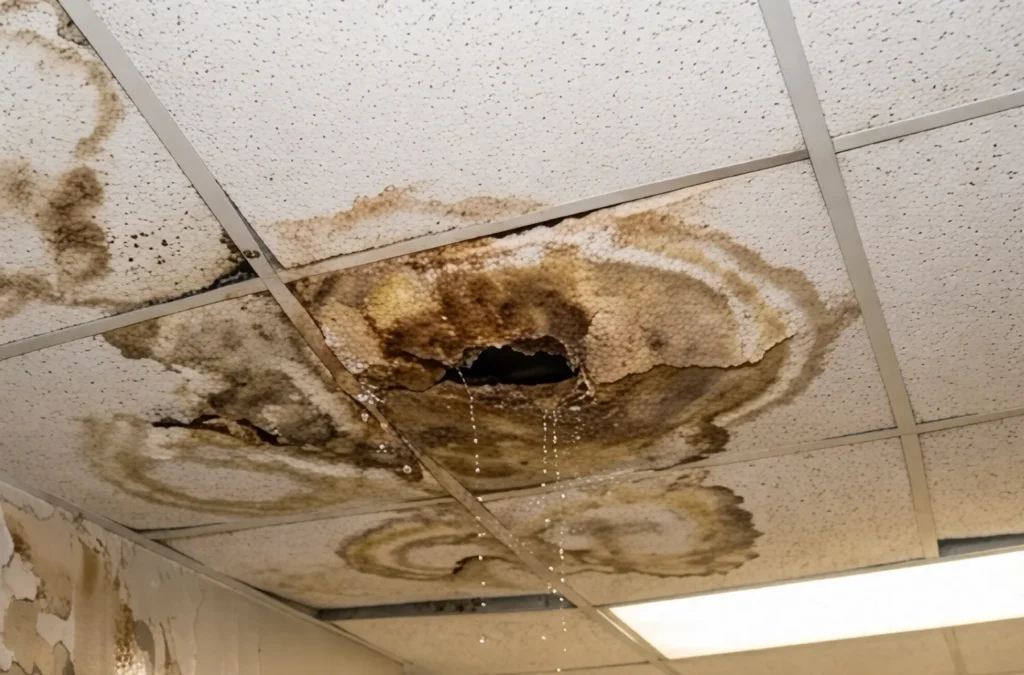
Move inventory and portable equipment only if the area is safe, and use plastic sheeting to protect items you can’t relocate. Place suitable containers beneath the leak and use floor protection to control spreading water. Isolate wet areas with signs or barriers, especially near electrical equipment, outlets, lighting, and walkways. Keep employees away from sagging or displaced ceiling tiles because they may fall or conceal electrical or structural hazards.
2. Document & Mark Leak Entry Points
Record video of the active leak and photograph wet ceilings, floors, inventory, equipment, and visible damage as soon as practical. Note the date, time, weather conditions, affected areas, and emergency actions taken. If safe, mark the interior location where water appears; this documents the drip point and helps technicians compare interior damage with the roof layout. Contact your insurance provider promptly because claim documentation requirements vary by policy and carrier.
3. Dispatch Emergency Roof Repair Crews
Do not send internal maintenance staff onto a slippery commercial roof during high winds, lightning, or heavy rain. Exterior ladders and wet membranes create serious fall hazards, and roof access may be unsafe even with fall-protection equipment. Professional technicians assess conditions before accessing the roof and follow an appropriate safety plan. When conditions permit, crews may install a compatible temporary patch, mechanically secure a tarp, or divert water while planning the permanent repair.
How Professionals Handle Active Roof Leaks
Emergency roof repairs focus on stabilizing the situation and limiting further water intrusion. When technicians arrive during a storm, they assess interior and roof-access hazards, protect occupants, and choose a temporary measure suited to the roof system. Depending on conditions, crews may use compatible wet-weather materials, temporary patches, mechanically secured tarps, or water-diversion methods.
A storm patch is temporary. It may limit immediate damage but does not correct the underlying membrane breach, flashing failure, drainage problem, or concealed moisture. The patch may require additional repair or replacement after the roof has dried and can be safely inspected.
Moisture can affect insulation, decking, framing, and interior finishes. Wet insulation may lose thermal performance or require removal, while prolonged moisture can damage decking, corrode metal components, or contribute to mold growth. Emergency work buys time for a complete inspection and permanent repair after the weather improves.
Next Steps After the Storm Clears
After the temporary measure is secure and severe weather passes, contact your commercial insurance provider. Submit your photos, videos, damage records, and emergency-repair documentation, and ask what additional information your claim requires.
A dry warehouse floor does not confirm that the problem is resolved. Schedule a diagnostic inspection during the first safe, dry-weather window. Technicians may use visual inspection, moisture testing, or targeted openings to assess the insulation, decking, and other roof components. They can then complete the appropriate membrane or flashing repair and address any confirmed structural damage before the next major weather system arrives.
Related Articles:
- Handling Emergency Roof Damage During Tacoma Fall Storms
- Ensuring Quick Emergency Roofing Services in Bellevue, WA
Stop Active Leaks With Fields Roof Service
When water breaches your roof, you must act aggressively to protect your inventory and keep your staff safe. Ignoring an active leak guarantees severe structural damage to your facility.
Fields Roof Service deploys rapid response teams across Washington to stabilize leaking commercial buildings. We apply secure temporary waterproofing during heavy storms to stop interior damage immediately. Once the weather clears, we return to build a permanent solution.
Call (253) 852-4974 right now to dispatch an emergency roof repair service to your facility.