
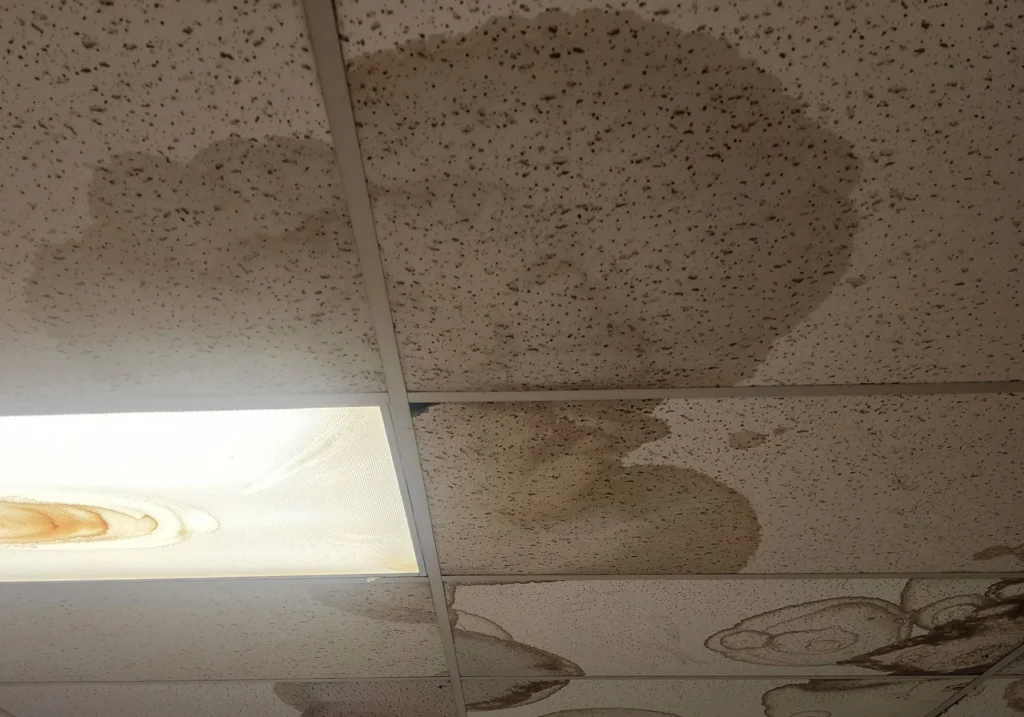
A ceiling that drips during high winds but stays dry in calm rain is a frustrating mystery. Washington storms drive rain against roof openings that ordinary rainfall may not expose. Solving a leak that comes and goes requires a leaking roof specialist to locate the entry point and repair the failed roofing detail.
Can High Winds Blow Rain Under Roof Shingles?
High winds can drive rain beneath shingles, especially where tabs are unsealed, damaged, or improperly fastened. Wind-driven rain can also enter through gaps around flashing, vents, and roof intersections without lifting the surrounding shingles.
Once rain passes beneath the shingles, underlayment provides a secondary water-shedding barrier. Interior leakage occurs when that protection is damaged, improperly installed, or interrupted at vulnerable details. Water can then reach the interior through an exposed penetration or another opening in the roof assembly.
The Wind vs. Rain Leak Matrix
Gravity moves water downslope, while wind can drive rain beneath exposed overlaps and against flashing. Comparing these patterns helps a specialist focus the inspection on shingles, flashing, and other vulnerable roof details.
| Leak Characteristic | Standard Gravity Leak | Wind-Driven Rain Leak |
| Water Movement Path | Rain enters an existing opening; water may travel before dripping indoors. | Wind drives rain beneath vulnerable overlaps or into flashing and vent gaps. |
| Visual Ground Evidence | Missing shingles or damaged flashing may be visible, but smaller defects remain hidden. | Shingles may appear flat despite broken sealant bonds; other entry points can also be difficult to see. |
| Interior Damage Location | Stains can appear beneath the opening or farther along the water’s path. | Stains can also appear away from the entry point; wind direction helps narrow the search. |
These are diagnostic clues, not rigid categories. Both patterns require inspection of the roof covering and vulnerable details.
Why You Need a Roof Leak Specialist to Find Hidden Wind Damage
Ground inspections can miss wind damage because shingles may settle flat after gusts. Broken sealant bonds, creases, and tears can remain even when the roof looks intact from below. A flat-looking shingle does not prove its wind resistance is unchanged.
Finding the breach requires more than looking at asphalt. A trained specialist checks shingle condition, fastening, flashing, and sealant bonds, disturbing intact seals only when necessary. The specialist also considers wind direction, the leak’s timing, and moisture trails in the attic. Those clues help distinguish a shingle-related entry point from a flashing, vent, or roof-transition failure before any repair begins.
Specialists distinguish a broken bond from physical shingle damage. Creased, cracked, or torn shingles need a different repair from intact tabs that have simply lost adhesion. That distinction helps determine whether hand-sealing or replacement is appropriate.
How a Specialist Locks Down a Wind-Damaged Roof
Fixing a wind-driven leak takes more than hammering down loose nails. The repair must address the actual entry point, whether that means restoring shingle bonds, replacing damaged material, or repairing flashing around a penetration. Otherwise, an apparently tidy patch can leave the leak unresolved.
A specialized repair involves two targeted physical steps:
- Resealing Intact Asphalt: For sound shingles with broken bonds, the crew hand-seals tabs using manufacturer-approved roofing cement in the specified locations and quantities. This bonds overlapping shingles and improves wind resistance; excessive cement can interfere with proper shingle seating and complicate future repairs.
- Integrating New Material: Creased, cracked, or torn shingles require replacement rather than cement alone. The crew removes damaged material, checks the underlayment for deterioration and the wood decking for moisture damage, and integrates replacement shingles with the existing courses to restore the water-shedding assembly.
Related Articles:
- Ceiling Leak in Tacoma? How Professional Roof Repair Helps
- Signs You Need to Call an Olympia Leaking Roof Specialist
Stop Wind Leaks With Fields Roof Service
Stopping wind-driven rain requires testing sealant strips and securing vulnerable edges against uplift. Pacific Northwest storms exploit aging asphalt, so our crews evaluate actual adhesive bonds rather than just scanning for missing shingles.
Fields Roof Service pinpoints complex water intrusion directly at the source. We inspect the roof deck, check individual tabs, and trace the lateral paths amateur checks overlook. Finding where gusts breach your building envelope lets us seal the entry points permanently.
Contact us today to schedule an inspection with a certified leaking roof specialist and keep your home dry through the next windstorm.