
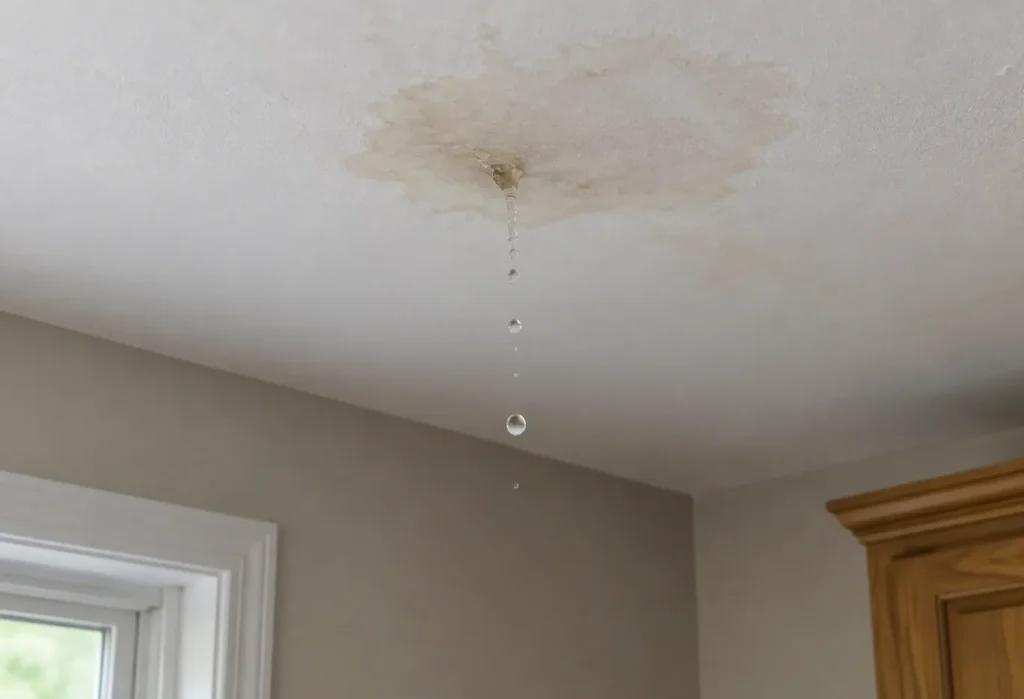
Seeing water drip through drywall during a cold snap may seem like an obvious reason for an urgent roof leak repair. But on a rain-free day, attic condensation is one possible cause. Warm, humid indoor air can reach the attic and condense against cold roof decking.
Why Is Water Dripping From My Ceiling When It Is Not Raining?
Ceiling drips during a dry cold snap can stem from attic condensation rather than an exterior roof puncture. Warm, humid air from the living space rises through gaps in the ceiling plane and contacts cold roof decking. When the decking surface is cold enough, that moisture condenses into frost or droplets that can melt as temperatures rise, creating an interior leak that mimics an active roof puncture.
A roof leak can still occur without rain. Snowmelt, ice dams, plumbing failures, and moisture already trapped in the roof assembly can also produce interior dripping. That is why you should confirm the source before starting repairs.
Urgent Roof Repair vs. Attic Ventilation
Both issues can threaten drywall and insulation, and both deserve a professional assessment. The difference is the service your home may need: an exterior puncture may require emergency patching to stop rainwater intrusion, while condensation may require a roofing technician to evaluate ventilation, insulation, air sealing, and exhaust ducts.
| Diagnostic Sign | Attic Condensation (Sweating) | Exterior Roof Puncture (Active Breach) |
| Leak Timing | Drips during or after cold, clear conditions as temperatures rise. | Drips during or shortly after rain, windstorms, or snowmelt. |
| Stain Pattern | Dampness may be widespread across the attic or concentrated near air leaks and exhaust ducts. | Stains may be localized and recur beneath a particular roof section. |
| Nail Condition | Nail tips may appear frosted, white, or corroded where attic moisture is present. | Nail tips may remain dry except near the affected roof area. |
| Attic Conditions | The attic may feel humid, with frost or damp sheathing during cold weather. | Moisture patterns may follow a path from a roof penetration, flashing detail, or damaged area. |
Water inside your ceiling always warrants a professional inspection. Instead of guessing from the hallway, have an experienced roofing contractor check the attic and roof to determine whether you are dealing with an exterior leak, trapped condensation, or another moisture source.
Where Does That Attic Moisture Come From?
A roof deck does not sweat on its own. Moisture builds up when humid indoor air reaches the attic and cannot dry effectively.
When technicians inspect attics during a cold snap, moisture often traces back to one or more of these sources:
- Vented Exhaust Fans: Bathroom fans routed into the attic rather than ducted completely outdoors can release warm, humid air against cold decking.
- Air Leaks in the Ceiling Plane: Gaps around can lights, attic access hatches, and plumbing chases can allow heated indoor air to move into the attic.
- Restricted Intake Ventilation: Insulation covering soffit vents can limit the airflow needed to move moisture out through upper roof vents.
How Balanced Attic Ventilation Stops Condensation
Controlling cold-weather condensation involves more than ventilation alone. A balanced system uses intake vents low at the soffits and exhaust vents high at the ridge, allowing outside air to move through the attic and carry moisture outward.
Insulation can accidentally block soffit vents and restrict that airflow. Installing baffles between rafters helps maintain an open channel from the soffit to the attic space. Restoring airflow, sealing ceiling-plane leaks, and ensuring exhaust fans terminate outdoors reduce the conditions that allow frost and condensation to form.
Related Articles:
- How to Handle a Ceiling Leak With Tacoma Roof Repair Pros
- Urgent Roof Leak Repair: 3 Steps to Stop Damage & Get Help
Secure Your Home With Fields Roof Service
Accurate diagnostics prevent unnecessary and expensive roof tear-offs. Misdiagnosing poor ventilation as a failed roofing membrane wastes time and money. You need an experienced contractor to verify if that dripping water is trapped humidity or a failing flashing joint.
Fields Roof Service understands how Pacific Northwest weather interacts with local residential construction. We check your underlayment, inspect your decking, and measure your airflow to pinpoint the source of your winter moisture. We provide practical, mechanical solutions that keep your insulation dry and your framing secure.
Contact us today to have your attic evaluated or to schedule your urgent roof leak repair before the next storm hits.