Autumn rain puts commercial roof drainage and vulnerable details to the test. When water enters a building, waiting for the storm to pass without taking action can increase the risk of damage to inventory, equipment, and interior finishes. Prompt commercial roof leak repair can help limit further water intrusion. Facility managers need a clear response plan to protect people and contain water while the weather makes roof access unsafe.
How Do You Fix a Commercial Roof Leak While It Is Raining?
During active rain, the priority is to protect people and limit interior damage. A roofing contractor may use a temporary cover, water diversion, or a compatible emergency patch when conditions and the roof system allow. Permanent repairs usually follow once the roof can be inspected and the required materials can be installed properly.
The Wet-Weather Repair Protocol for Fixing Commercial Roof Leaks
Handling an active leak requires an organized response. Roof work should not proceed when rain, wind, or other conditions make access unsafe. Facility staff and roofing technicians should follow a clear process to stabilize the building and plan the repair.
1. Active Leak Containment
Protect people and property inside before considering roof access. If safe, move inventory, electronics, and palletized goods away from the drip area. Cover items that cannot be moved, but keep clear of wet electrical equipment and fixtures; have qualified personnel assess electrical hazards.
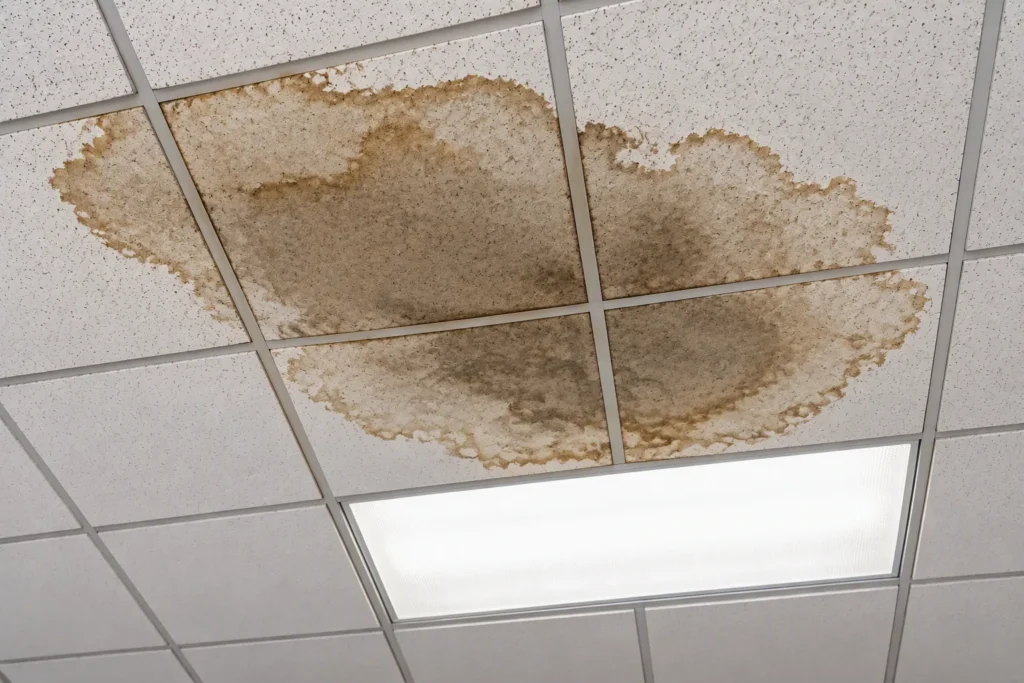
Water can spread across polished concrete and create slip hazards. Keep employees away from wet areas and use signs or barriers to restrict access. If ceiling tiles are saturated, sagging, or displaced, do not remove them with poles or stand underneath. Keep people clear and have qualified personnel assess the ceiling and any electrical or structural risks before removal.
Record where water is entering the building and take photos when it is safe. Marking the interior drip location can help technicians document the affected area, but it may not be directly below the roof opening. Water can travel along the roof assembly or steel deck before it reaches the ceiling.
2. Emergency Wet-Surface Sealing
Do not send facility staff onto a wet roof during heavy rain, lightning, or high winds. Wet membranes can be slippery, and fall protection does not make every weather condition safe. A roofing contractor should assess access and work conditions before going onto the roof; work may need to wait until conditions improve.
When roof access is safe, technicians can identify likely entry points and choose a temporary measure suited to the roof system. Options may include a secured tarp, water diversion, or a compatible emergency patch. Some products allow damp-surface application, but compatibility and application conditions vary.
3. Post-Storm Restoration
Temporary measures are intended to limit immediate water intrusion, not replace a permanent repair. After the weather clears, a roofer can inspect the roof, identify the source, and determine whether membrane, flashing, drainage, or other components need repair.
If moisture beneath the roof surface is suspected, a qualified contractor may use appropriate inspection or moisture-survey methods. Thermal or nuclear surveys have limitations and may need verification; a wet roof or standing water can make some readings unreliable. If the inspection confirms the insulation is saturated or no longer serviceable, you may need to have it removed and replaced. The repair should use materials compatible with the existing roof system and follow its installation requirements.
Preparing Your Commercial Property for Autumn Storms
Proactive maintenance can reduce preventable drainage problems during the wet season. Have roof drains, scuppers, gutters, and outlets inspected and cleared of leaves and other debris before heavy rain. Check accessible perimeter coping and wall flashing for visible damage, and arrange repairs when defects are found.
Blocked outlets can slow roof drainage and contribute to ponding. Clearing them helps water reach the designed drainage system, but it cannot guarantee that the roof will handle every storm or prevent leaks. A pre-season inspection gives facility managers time to address drainage and flashing concerns before the next major rainfall.
Related Articles:
- How Kent Emergency Commercial Roof Leak Repair Helps You
- What Happens When You Ignore Kent Commercial Roof Leaks?
Stop Water Intrusion With Fields Roof Service
Managing commercial real estate requires an aggressive strategy for Pacific Northwest seasonal weather. Acting quickly during an active leak protects inventory and prevents costly structural repairs.
Fields Roof Service’s technicians are equipped to stabilize commercial flat roofs during severe weather events. We use wet-weather sealing methods to stop active leaks immediately, then complete comprehensive dry-weather structural repairs.
Contact our team to secure professional commercial roof leak repair before the next heavy rainstorm.