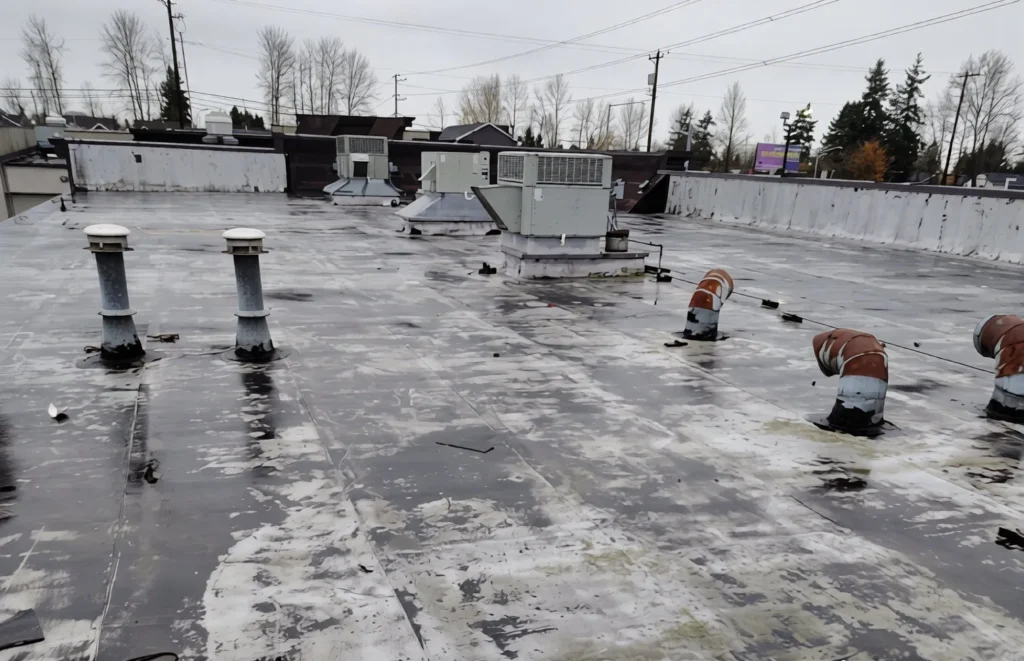
Washington winters can worsen existing problems on unprepared commercial flat roofs. Booking a professional roof inspection service before the November storms arrive can help identify minor summer wear before it becomes a larger winter leak. Professionals know which flat-roof details commonly fail and focus on the vulnerabilities most exposed to prolonged rain, wind, temperature changes, and seasonal debris.
What Is Included in a Professional Fall Roof Inspection in Western Washington?
A professional fall roof inspection evaluates membrane condition, flashing details, drainage components, rooftop equipment curbs, perimeter coping caps, and expansion joints before winter weather arrives. Finding small defects during a dry autumn weather window can limit moisture intrusion and reduce the risk of expensive repairs when heavy rain begins.
1. Inspect Membrane Integrity
The primary rubber or plastic membrane weathers under UV exposure, temperature changes, foot traffic, and rooftop equipment activity. Technicians safely inspect for blistering, cracks, punctures, wrinkles, open seams, and other damage. Finding a weak seam early may allow a localized repair, while an unrepaired breach can let moisture reach the insulation, decking, or other roof components.
2. Check Flashing Seals
Flashing protects transitions around walls, curbs, penetrations, and other vertical surfaces. Thermal movement, corrosion, poor attachment, and aging can damage joints or loosen fasteners. Inspectors check sealants, laps, counter-flashing, base flashing, and terminations, then repair defects that could admit wind-driven rain.
3. Clear Drain and Scupper Flow
Reliable drainage, adequate slope, and functioning overflows help protect a flat roof. Standing water weighs about 8.34 pounds per U.S. gallon and adds load to the roof assembly. Leaves and pine needles can mat over strainers and restrict flow. Technicians clear drains and scuppers, inspect drain bowls and strainers, and confirm that outlets remain secure and unobstructed.
4. Audit HVAC Curb Seals
Rooftop HVAC units sit on curbs integrated with the membrane and flashing system. Vibration, movement, weathering, and poor adhesion can stress corners, seams, counter-flashings, and sealants. Technicians inspect the curb perimeter and nearby penetrations for gaps or separation, then repair defective details that could let water in.
5. Verify Coping Cap Fasteners
Metal coping caps cover the upper edges of perimeter parapet walls. High-wind events can place uplift forces on these components, while corrosion, movement, and failed joints can weaken their attachment. If fasteners loosen or coping joints open, rain can reach parapet seams and vulnerable wall materials. Technicians inspect the cap, joints, cleats, fasteners, and adjacent flashing, then repair or resecure the system per the design.
6. Test Expansion Joint Flex
Large commercial buildings use expansion joints to accommodate movement between building sections and connected roof components. The joint cover or bellows must remain continuous, properly attached, and flexible enough to move with the assembly. Weathering, aging, displacement, and incompatible repairs can cause the cover to crack, split, or lose alignment. Technicians inspect the full length of the joint and evaluate whether it can accommodate movement without stressing the membrane or opening a path for water.
Why Routine Commercial Roof Inspections Save Money
Ignoring a dry roof in early autumn can lead to more expensive winter repairs. Flat-roof leaks rarely appear directly below the original defect. Water can travel horizontally along steel decking, insulation, vapor-retarder surfaces, or structural members before a wet spot appears on the ceiling. By the time a drip becomes visible, concealed moisture may already have affected insulation, decking, or interior finishes, although the extent of damage requires inspection.
Routine inspections help prevent this hidden deterioration. Technicians identify open seams, damaged flashing, blocked drainage, and deteriorated sealants before continued rain and temperature changes worsen them. Fixing these specific vulnerabilities today can cost far less than arranging emergency repairs during a December leak.
Related Articles:
- What Bellevue Roof Inspection Services Check During Winter
- Find Roof Weak Points With Expert Kent Roof Inspection Service
Prepare Your Building Before Winter Weather Hits
Washington storms dump massive amounts of water onto flat commercial roofs in a very short window. A single loose coping cap can drive rain directly into your facility. Fixing these minor defects right now stops a small leak from becoming a massive structural rebuild.
Fields Roof Service handles the high ladder work and focuses on the critical details that prevent early failure. Contact us to book your roof inspection service before the rainy season officially begins.