Low-slope roofs are designed to direct rain toward drains or scuppers. When drainage is blocked, or roof details deteriorate, water can pond or enter the building. A leak can disrupt operations and damage inventory, so arranging a reliable Kent roof repair service is an immediate priority. Knowing common trouble spots helps you spot warning signs and get the right inspection before a small problem spreads.
Where Do Commercial Flat Roofs Leak the Most?
Common trouble spots on commercial low-slope roofs include clogged drains or scuppers, damaged membrane seams, and deteriorated flashing at edges and parapets. The exact cause depends on the roof system and its condition.
Leaks often start where roof components meet or where water collects. Knowing these areas helps you spot warning signs and schedule an inspection before interior damage grows.
1. Clogged Drainage Scuppers and Internal Drains
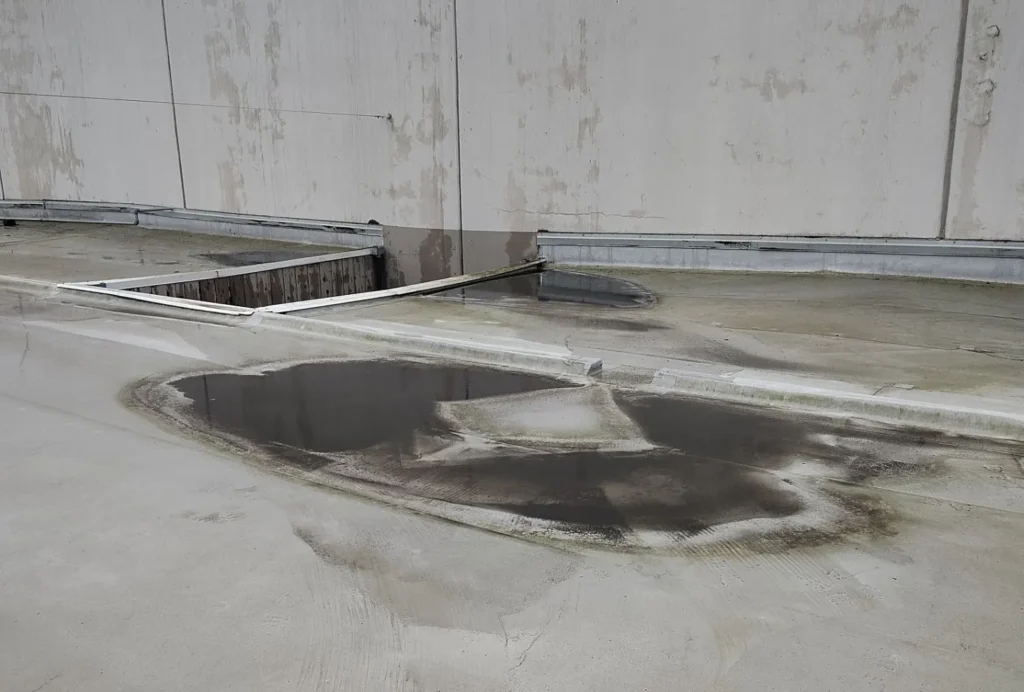
Low-slope roofs use designed slopes to move water toward drains, scuppers, or other outlets. Fall storms can carry leaves, needles, and other debris into these openings. If an outlet or strainer becomes blocked, water may drain slowly and pond on the roof.
Ponding adds weight. The load depends on the pond’s depth and area and the roof’s design. Standing water can stress the roof system and contribute to leaks. If you see deep ponding, sagging, or water entering the building, keep people away from the affected area and arrange a professional assessment.
During routine maintenance, have an authorized person check that drain strainers and overflow outlets are clear and secure. Note recurring debris or standing water for follow-up. Don’t access the roof during a storm or without the required fall-protection measures.
2. Degraded TPO and EPDM Membrane Seams
Commercial roofs use a range of materials, including TPO and EPDM single-ply membranes. Their seams are made differently: TPO seams are typically heat-welded, while EPDM seams commonly use seam tape or adhesive. Aging, installation defects, movement, or physical damage can compromise a seam.
When a seam or another part of the membrane fails, water can enter the roof assembly and travel before it shows up inside. The ceiling drip may not be directly below the breach. A qualified roofer can inspect the membrane and seams using methods appropriate to the specific system. That’s more reliable than probing seams yourself during a routine roof repair in Kent.
3. Failing Perimeter Edge Flashing and Parapet Joints
Roof edges and parapets need properly installed flashing and coping to shed water and secure the roof assembly. Wind, weathering, poor installation, or movement at joints can loosen components or create openings where water enters. Metal flashing expands and contracts as temperatures change, so details need to allow for that movement.
If flashing joints open or components loosen, wind-driven rain may enter behind the flashing and move into a wall or roof assembly. Interior staining near an exterior wall can have several causes, including roof-edge leaks, masonry, or windows. An inspection can help trace the entry point rather than relying on the location of the stain alone.
Why Proactive Kent Commercial Roof Repair Saves Money
A small ceiling stain or drip can signal a problem that deserves attention. Water entering the roof assembly may wet insulation or reach the structural deck; the extent depends on the leak and how long it has gone unnoticed. Wet insulation can lose thermal effectiveness, and continued moisture may contribute to deterioration or corrosion.
A repair made while damage is localized may cost less than replacing wet materials or repairing affected structure. Schedule periodic inspections and address drainage or flashing concerns early to reduce the chance that a manageable roof problem becomes a larger repair.
Related Articles:
- Common Issues With Tacoma Flat Commercial Roofs & Fixes
- How Fall Leaves Clog Drains on Puyallup Flat Commercial Roofs
Protect Your Asset With Fields Roof Service
Managing commercial property leaks requires speed and exact precision. You need technicians who know exactly how to probe membrane seams and reseal edge flashing. Letting a minor ceiling drip become a major flood puts your tenants and inventory at serious risk.
Fields Roof Service finds and secures flat roof vulnerabilities before they destroy your interior. We document every failure point and complete durable repairs that protect your asset.
Schedule your Kent roof repair service and keep your commercial property completely dry. Reach out today.