Fall in Washington State brings heavier rain and renewed pressure on commercial roofing systems. After a long, dry summer, property managers must address debris, aging sealants, blocked drainage, and damaged roof details before water exposes them.
Waiting until water stains appear on ceiling tiles turns routine maintenance into an urgent repair. Shift your focus from summer cooling costs to fall waterproofing. Scheduling a professional roof maintenance service now gives your building the best chance to enter the wet season with clear drainage and sound roof details.
How Do I Prepare My Commercial Roof for Rain in Washington?
Preparing a commercial roof for rain in Washington starts with clearing drainage pathways and inspecting seals, flashings, seams, and penetrations before the first major storm.
Summer UV exposure, temperature changes, foot traffic, and equipment service can age membranes and weaken sealants around HVAC units. When autumn rain arrives, water exploits every open seam, damaged flashing, and blocked drain. The shift from August dryness to October storms can expose problems quickly. Taking action now prevents leaks from becoming operational shutdowns.
The 5-Step Pre-Fall Roof Inspection
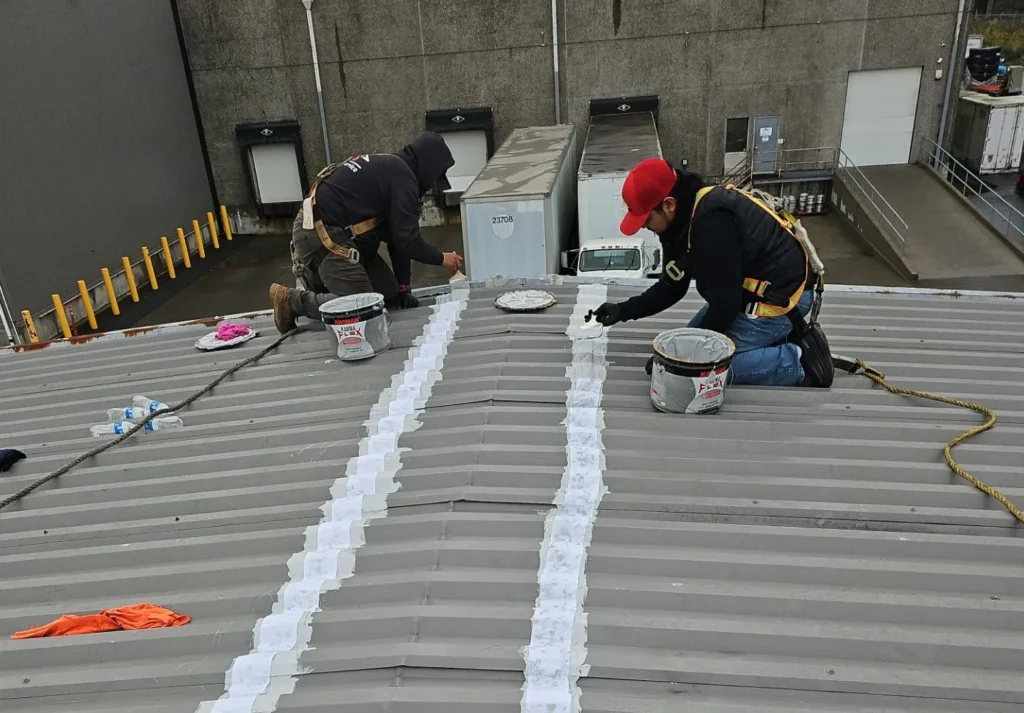
A proper pre-fall inspection follows a practical sequence to identify visible and developing damage. Here are the active steps professionals take to evaluate a commercial roof:
- Clear drains, scuppers, gutters, and strainers of debris.
- Inspect rubber boots and flashing around plumbing vents.
- Check metal flashing, seams, and counterflashing at wall joints.
- Remove loose branches, accumulated debris, and damaging moss.
- Verify sealant and flashing around HVAC curbs and other penetrations.
Why Reactive Patching Fails in the Pacific Northwest
Reactive mindset inflates commercial maintenance budgets. Chasing leaks during a November storm means dealing with wet surfaces, restricted access, emergency scheduling, and possible interior damage.
Experienced facility directors know that hoping for the best is not a maintenance plan. Temporary patches applied over dirty or wet surfaces often fail quickly, while properly prepared repairs can stabilize a localized problem. Investing in a scheduled roof maintenance service addresses small defects while the roof is accessible and dry. Protecting the building before the weather turns costs less than managing a preventable emergency.
What Happens When Water Ponds on a Flat Roof?
When water ponds on a low-slope roof, it adds weight and keeps the membrane, seams, and insulation wet. Commercial roofs use designed slope, drains, scuppers, gutters, and leaders to move water away. Summer debris, dirt, and bird nesting material can block strainers or reduce drainage capacity. When a fall storm arrives, the blocked pathway leaves water standing across the roof.
Water weighs about eight pounds per gallon. A broad, deep pond can add thousands of pounds to a roof, especially when the structure or drainage system already has defects. Persistent ponding also increases the risk of membrane deterioration, seam stress, algae growth, and concealed moisture. The 48-hour benchmark identifies problematic ponding; it does not mean every roof membrane fails immediately after that period.
Once water enters the roof assembly, insulation can lose thermal resistance and the deck can begin to corrode. A comprehensive roof maintenance service clears drainage pathways, documents low spots, and identifies whether the roof needs cleaning, drainage work, repairs, or further moisture testing.
Securing Roof Penetrations and Flashing
Water often enters where the roof connects to another material. HVAC units, skylights, vents, pipes, and gas lines interrupt the membrane and require properly designed flashing and weather seals. These details experience movement, UV exposure, temperature changes, and service traffic, so cracked sealant or loose flashing deserves prompt attention.
You should evaluate these penetration points at least annually and after major rooftop work. A roof-level inspection can identify split sealant, lifted flashing, open seams, and damaged boots that a ground view cannot confirm. Repairing a small defect while the surrounding surface is clean and dry is far less disruptive than repairing interior finishes after a leak. Booking a thorough roof maintenance service helps trained professionals find these failures before fall storms turn them into expensive building damage.
Related Articles:
- How Kent Commercial Roof Maintenance Prevents Rain Damage
- How Regular Roof Maintenance Benefits Bellevue Businesses
Secure Your Facility With Fields Roof Service
Protecting a large commercial building requires proactive planning and reliable local expertise. Catching small defects in late summer keeps your business running smoothly through the harshest winter weather. Ignoring the changing seasons simply leaves your inventory and tenants completely exposed to the elements.
Fields Roof Service builds and maintains weather-tight commercial systems across Western Washington. Our crews handle the tough preparation work cleanly and safely.
Reach out today for a comprehensive roof maintenance service and lock out the autumn rain before the storm season officially begins.