As summer temperatures rise in Bremerton, keeping a large commercial building cool becomes expensive. Applying a reflective roof coating can be a practical way to manage these growing energy bills. A qualified roof coating contractor can add this layer over your existing roof much faster than a full replacement. Understanding how these materials work helps facility managers see the value of this simple building upgrade.
Beating the Summer Heat in Large Facilities
Large commercial and industrial buildings absorb significant solar energy through their rooftops. Standard dark asphalt or tar surfaces can reach high heat levels on sunny days, transferring intense heat into the interior. This forces HVAC systems to work overtime, rapidly driving up electricity expenses.
For Bremerton businesses facing warmer summers, this heat transfer translates to substantial cooling costs. Flat commercial roofs are particularly vulnerable as they absorb direct sunlight all day. Rather than investing in a full replacement, facility managers can hire a professional roof coating contractor to restore the surface and drastically reduce heat absorption.
How Roof Coatings Compare to Bare Asphalt
|
Factor |
Bare Asphalt/Tar Roof |
Elastomeric Coating |
|---|---|---|
|
Heat Absorption |
Dark surface that absorbs and retains heat |
Light, reflective surface that bounces heat away |
|
Surface Temperature |
Stays hot (baseline) |
Typically runs cooler |
|
Cooling Energy Use |
No expected savings from the roof surface alone |
Lower costs from less AC strain |
These factors shift depending on building size, insulation quality, and local weather patterns. Get a professional energy assessment or payback estimate if you want quantified savings for your building.
How Elastomeric Materials Work
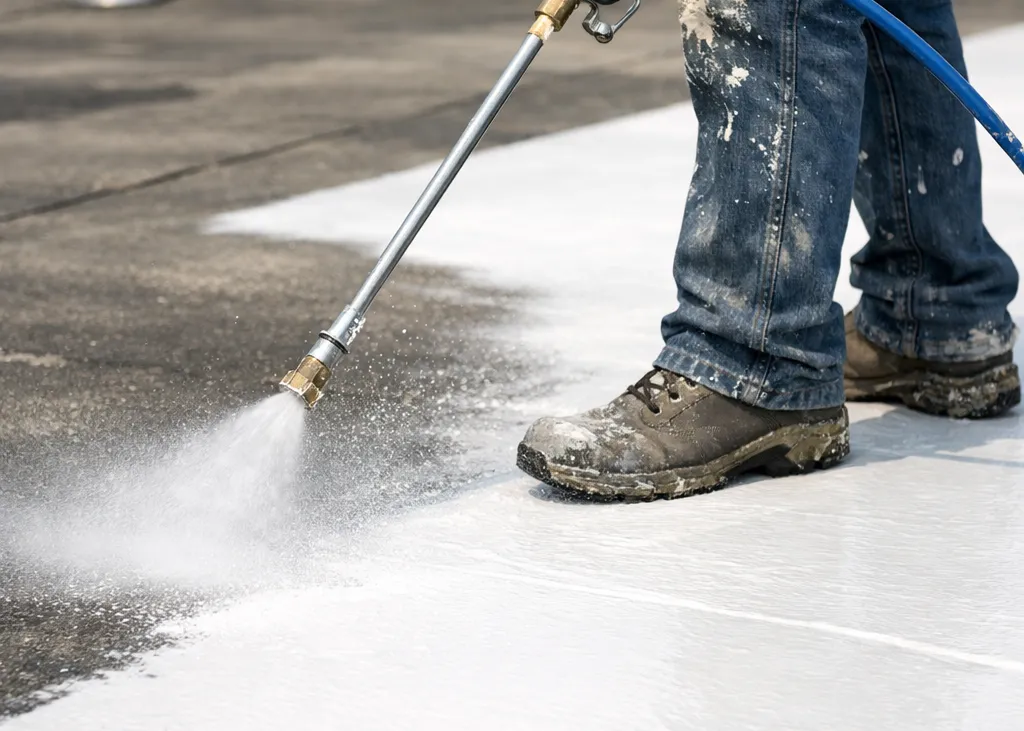
Elastomeric roof coatings are thick, flexible, rubber-like liquids applied directly to an existing roof surface. Once cured, they form a continuous membrane that reflects sunlight and protects the substrate underneath. A roof coating contractor typically applies these materials using spray equipment or rollers, and the process can often be completed in a day or two, depending on the roof size.
The “elastomeric” part matters because it means the coating stretches and contracts with temperature changes. In the Pacific Northwest, where roofs deal with cool, wet winters and warm summers, that flexibility prevents cracking and peeling over time.
Reflecting the Sun’s Rays
White and light-colored elastomeric coatings usually have a high solar reflectance index, meaning they bounce a significant portion of UV and infrared rays back into the atmosphere. Instead of your roof soaking up that energy and converting it to heat, the coating sends it away before it ever reaches your building’s interior. Think of it like wearing a white shirt on a hot day versus a black one. The difference in comfort is real, and the same principle applies to your roof on a much larger scale.
Sealing Micro-Cracks
Over time, flat roofs develop tiny cracks and gaps from thermal expansion, foot traffic, and weather exposure. These micro-cracks let moisture seep in, which degrades insulation and creates conditions for mold growth. When an elastomeric coating is applied as a liquid, it flows into every small imperfection and cures into a continuous, watertight barrier. This dual function, reflecting heat while sealing out water, is what makes coatings such a practical investment for Bremerton facilities.
The Long-Term Financial Benefits
A professionally applied roof coating typically costs a fraction of a full roof replacement. For a 10,000-square-foot commercial roof, the savings can be substantial, and the coating itself often lasts 10 to 15 years with proper maintenance.
Reducing Strain on Your HVAC
When your roof surface runs cooler, the ceiling below stays cooler too. That means your air conditioning cycles on less frequently and runs for shorter periods. Over a full summer, this reduced strain can lower cooling bills and extend the life of your HVAC equipment. Fewer repair calls, fewer compressor burnouts, and lower electricity consumption add up fast.
Delaying Full Replacements
A quality coating adds years to an existing flat or low-slope roof by shielding the membrane from UV degradation, ponding water, and thermal stress. Many building owners use coatings as a bridge strategy, buying themselves 10 or more additional years before a full tear-off becomes necessary. That’s real money back in your operating budget.
Related Articles:
Upgrade Your Facility with a Local Professional
If your Bremerton facility is dealing with rising cooling costs, a roof coating is one of the smartest investments you can make. Fields Roof Service has been protecting Western Washington buildings for decades. Our technicians specialize in applying roof coatings, starting each project with careful structural preparation. As an experienced roof coating contractor, we focus on delivering reliable results for your property.
Contact Fields Roof Service today to schedule an assessment and find out how much you could save this summer.