Managing a commercial building in Washington State means constantly controlling water intrusion. Facility managers know that a properly selected roof coating can extend the service life of a sound roof and delay a costly replacement. However, the best material still fails when the roof is wet, dirty, damaged, or coated under poor weather conditions. Hiring a roof coating contractor in late summer creates a strong application window while the roof is easier to prepare and keep dry.
When Should You Apply a Commercial Roof Coating?
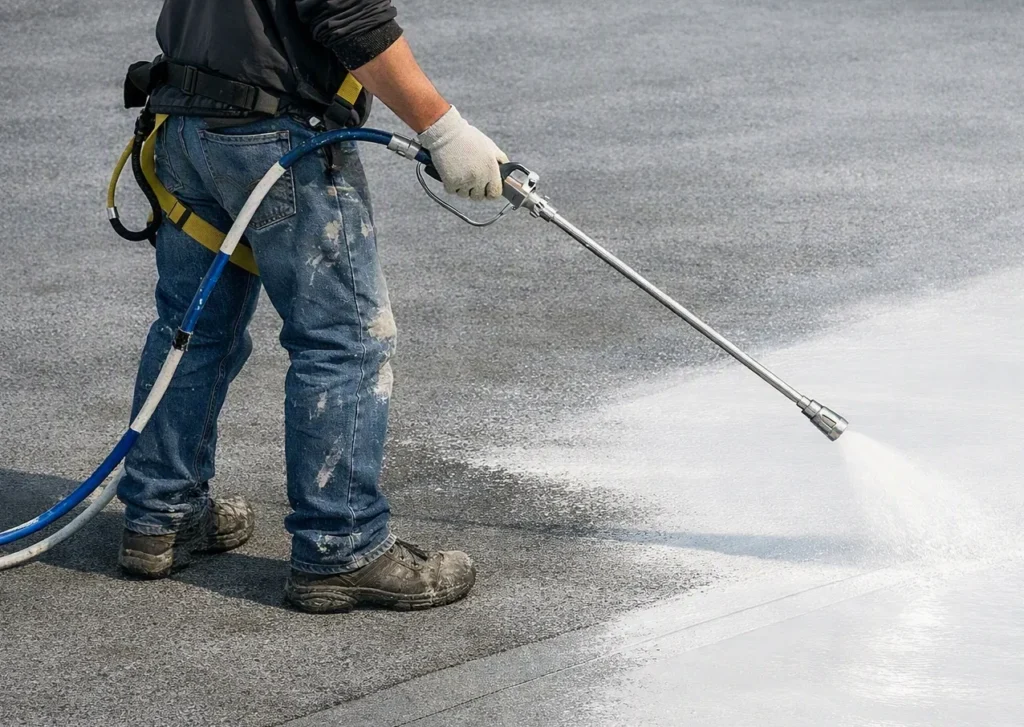
Commercial roof coatings are best applied during dry weather with moderate temperatures and minimal risk of rain. In Western Washington, late July and August often provide that opportunity. Liquid-applied systems need a dry substrate, suitable surface temperatures, and enough time between coats for the specific chemistry to cure.
The Ambient Temperature Curing Rule
Elastomeric roof coatings cure through product-specific chemical and physical processes. Acrylics, silicones, polyurethanes, and other systems have different temperature, humidity, dew-point, and rain requirements. Many acrylic products require application at or above 50°F, while some polyurethane coatings cure at lower temperatures.
If rain, condensation, or freezing temperatures arrive before the coating cures, the finish can blister, wash, soften, or lose adhesion. The contractor must follow the manufacturer’s technical data sheet and leave enough time between application, dew formation, and the next weather event.
How Does Western Washington Weather Dictate Roof Maintenance?
Property managers hate spending maintenance budgets on failed projects. In the Pacific Northwest, spring showers and early autumn drizzle can interrupt cleaning, repairs, and coating applications. Attempting liquid work during an unstable weather window increases the risk of trapped moisture, incomplete curing, and schedule delays.
A roof must be dry before coating begins, and overnight dew can affect a surface that appeared dry during the afternoon. The dry stretch often available in August makes surface preparation more reliable and gives each coat time to cure. It does not eliminate weather risk, so professional crews still check surface temperature, humidity, dew point, and the forecast before starting.
What Are the Real Business Benefits of August Coating Projects?
Applying a restorative coating in August prepares a repairable roof before the wetter season arrives. Facility directors know that full replacement costs more and creates greater disruption than a properly planned coating project. A suitable coating can extend the life of the existing roof, improve reflectivity, and reduce the rate of weather-related aging.
It also creates a continuous protective layer across prepared roof areas and reinforces vulnerable seams, penetrations, and flashing details. A skilled roof coating contractor uses the dry-weather window to complete this work with fewer interruptions. Proactive timing reduces emergency leak calls and gives the business more predictable maintenance planning.
Why You Should Not Wait Until the Fall Storms Arrive
Human nature makes people ignore roofs until water drips onto a tenant’s desk. By October, contractors may be managing storm repairs, scheduled replacements, and weather delays at the same time. Waiting also leaves less dry weather for cleaning, repairs, and coating application.
If you wait for the first major autumn storm to call a roof coating contractor, the roof may need emergency repairs before coating is even possible. Securing an August inspection gives the contractor time to test the substrate, repair defects, and schedule the work during a workable forecast. Early planning protects the building before seasonal demand increases.
How Do Professionals Prepare a Roof for Liquid Coatings?
Successful coating depends on disciplined surface preparation. Contractors remove dirt, loose material, algae, grease, and moisture before applying the system. They inspect drains, seams, penetrations, flashings, and membrane condition, then complete repairs required for a sound coating base.
They replace wet insulation or damaged membrane sections when inspection shows that coating alone will not solve the problem. They also treat rusted metal, reinforce vulnerable seams, apply primer where required, and measure coating thickness during installation. A qualified roof coating contractor matches every preparation step to the existing roof and selected coating. Bringing in that contractor during August gives the roof the best chance to stay dry through preparation and curing.
Related Articles:
- Why You Need a Tacoma Roof Coating Contractor This Summer
- What to Look For in Kent Flat Roof Coating Contractors
Lock Out the Rain With Fields Roof Service
A restorative coating adds years of life to your commercial building while saving you the high cost of a full tear-off. Timing this project correctly is the only way to ensure the material performs as designed. Getting the work done in August locks out the harsh Pacific Northwest weather before it ever arrives.
Fields Roof Service builds strong, weather-tight systems for commercial properties across Western Washington. Our crews manage the preparation and application process smoothly to keep your daily operations running without disruption.
Contact us today to schedule an inspection and secure a highly rated roof coating contractor for your summer maintenance plan.