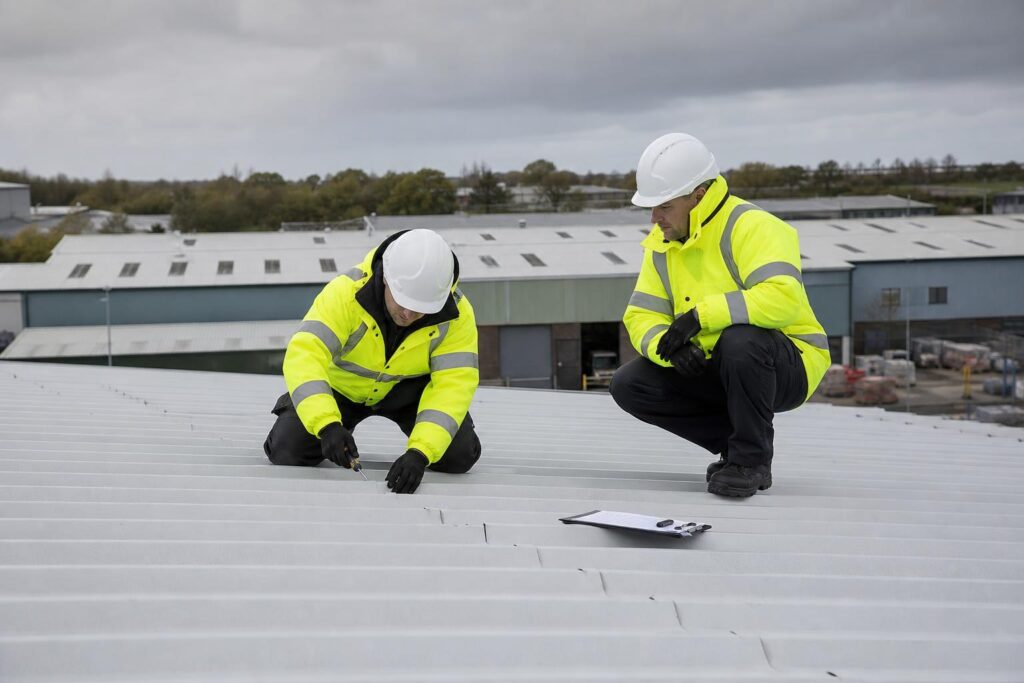
Most people picture a roofer nailing shingles onto a house. But the work that goes into protecting a 50,000-square-foot chemical plant or a steel fabrication shop is a completely different job. Industrial roofing specialists handle buildings where the stakes are higher, the materials are tougher, and a single mistake can shut down an entire operation.
Understanding Heavy-Duty Construction
Factories and processing plants often need much stronger protection than a standard office roof. While a basic warehouse may have simple needs, facilities dealing with extreme heat, heavy machinery, or corrosive chemical fumes require specialized solutions. For example, a standard roof membrane might last decades on a retail shop, but it can degrade much faster on a food-processing plant if grease exhaust breaks down the coating.
Industrial roofing specialists can help match the right system to your building’s specific hazards. This may involve choosing chemical-resistant materials, reinforcing the deck to support heavy equipment, or designing better drainage around multiple roof vents. In these demanding environments, a custom roof often becomes a vital part of the building’s daily operation.
Standard Commercial Warehouse Roofs vs. Complex Industrial Processing Roof Needs
|
Factor |
Standard Commercial Warehouse |
Industrial Processing Facility |
|---|---|---|
|
Chemical Exposure |
Minimal or none |
High: acid fumes, solvents, grease exhaust |
|
Equipment Load |
Light rooftop HVAC units |
Heavy machinery, large exhaust fans, piping |
|
Heat Resistance |
Standard insulation needs |
May handle internal temps above 200°F in some areas |
|
Foot Traffic |
Rare maintenance visits |
Frequent access for equipment servicing |
|
Drainage Complexity |
Simple slope to drains |
Multiple penetrations require custom flashing |
|
Membrane Type |
Single-ply TPO or EPDM |
Modified bitumen, metal, PVC, or specialty coatings |
|
Inspection Frequency |
Annual or biannual |
Quarterly or more often |
This table highlights why a one-size-fits-all approach fails. A warehouse roof can often use a straightforward single-ply system, while a processing plant may need layered membranes, specialized coatings, and reinforced decking all working together.
Navigating Complex Factory Roofs
Factory roofs can be busy and complex environments, often featuring active exhaust vents, conduit lines, and areas with high internal heat. Industrial roofing specialists in Kent and across the Pacific Northwest routinely manage these conditions, which can present unique challenges far beyond standard commercial projects.
Large metal buildings can expand and contract with temperature changes. While PNW swings are milder than those in other regions, movement still occurs, especially in facilities with high internal heat. If the roofing system cannot flex alongside this movement, seams may split and leaks can follow. To prevent this, specialists can design dedicated expansion joints and use flexible sealants that can handle the building’s specific temperature range.
Coordinating with plant operations is another crucial step. Because shutting down a production line for roof maintenance is rarely an option, experienced crews can plan their work around your shift schedules and production cycles to keep daily operations running with minimal disruption.
Handling Chemical Vents
Industrial exhaust vents often release harsh vapors, gases, or oil mists that can quickly corrode standard flashing materials. To protect the structure, industrial roofing specialists often install corrosion-resistant flashing, chemical-resistant boot seals, and specialized coatings, depending on the chemicals involved. They may also add custom containment features, such as raised curbs and drip edges. This helps prevent chemical condensation from collecting and breaking down the roof membrane, reducing the risk of hidden leaks developing over time.
Supporting Heavy Equipment
Rooftop machinery, such as cooling towers and exhaust fans, can weigh thousands of pounds and require reinforced structural support. Without proper weight distribution, these heavy units may compress insulation or damage the roof deck, creating low spots where water can pool. Regular foot traffic from maintenance crews can also wear down the membrane over time. Installing dedicated walkway pads and reinforced paths can protect these high-use zones and help extend the roofing system’s lifespan.
Further Reading:
Protect Your Operations With Expert Industrial Roofing
Industrial facilities often require specialized roofing knowledge to handle unique demands like chemical exposure, heavy equipment loads, and high internal temperatures. Partnering with experienced industrial roofing specialists can help safeguard your building and prevent unexpected operational downtime.
Fields Roof Service delivers heavy-duty commercial solutions across Western Washington. From routine maintenance and targeted repairs to complete upgrades, our trained crews thoroughly assess your decking, ventilation, and flashing to ensure your roof is properly configured for your facility’s specific environment.
Ready to secure your building? Schedule a professional industrial roof evaluation with our team today.