Managing a low-slope roof in the Pacific Northwest is a constant battle against moisture. Repeated rain tests every seam, flashing detail, drain, and membrane transition on a commercial building. Facility managers know that patching the same leaks year after year can become an expensive losing strategy. Deciding to fund a full commercial roof replacement requires inspection findings, lifecycle costs, and strategic planning rather than guesswork.
Why Do Flat Roofs Fail in the Pacific Northwest?
Flat and low-slope roofs in Western Washington fail for several connected reasons. Persistent moisture, clogged drains, poor flashing, installation defects, membrane aging, UV exposure, foot traffic, and repeated repairs can all weaken the system. Summer heat and temperature changes also add stress.
A low-slope roof depends on drains, scuppers, gutters, and a carefully designed slope to move water away. Temporary puddles may appear after heavy rain, but water that remains for extended periods signals a drainage or structural concern. Once seams, penetrations, or flashings fail, moisture can enter the insulation and deck, causing hidden deterioration before occupants notice interior staining.
When Is It Time to Upgrade Your Roofing System?
It is time to consider a roofing upgrade when the system requires frequent leak repairs, moisture has spread through the insulation, or the membrane and flashings are nearing the end of their service life. A localized puncture on an otherwise sound roof does not require full replacement, but widespread failures change the financial calculation.
Property managers cannot budget effectively around unpredictable emergency repairs. Continuing to patch an aging system allows leaks to disrupt tenants, damage inventory, and deteriorate interior finishes. At that point, funding a strategic commercial roof replacement can protect building contents and create more predictable long-term maintenance costs.
The 3-Point Non-Repairable Roof Checklist
Not every leaky building needs a completely new roof. However, the following conditions strongly indicate that repairs alone will not deliver a durable result:
- Widespread seam failure: When seams, flashings, and membrane transitions fail across multiple areas, isolated patches cannot restore reliable water resistance.
- Saturated insulation layers: Wet insulation loses thermal performance, adds weight, and can keep the roof assembly damp. The affected sections often require removal and replacement.
- Structural deck corrosion: Rusted steel decking can weaken the roof assembly and compromise fastener strength. A professional evaluation determines whether the damaged sections need repair or replacement.
How Do Professionals Verify This Hidden Damage?
Guessing about hidden moisture is a poor management strategy. Experienced roofers combine visual inspection with moisture surveys, infrared scanning, electronic testing, probes, and targeted core samples. A core sample allows the inspector to examine the membrane, insulation, and deck directly.
The inspection should map wet areas, identify the leak source, assess deck condition, and determine whether the damage is localized or widespread. These findings show whether the building needs repairs, a restoration system, partial replacement, or a complete commercial roof replacement.
How Do You Manage Business Operations During Construction?
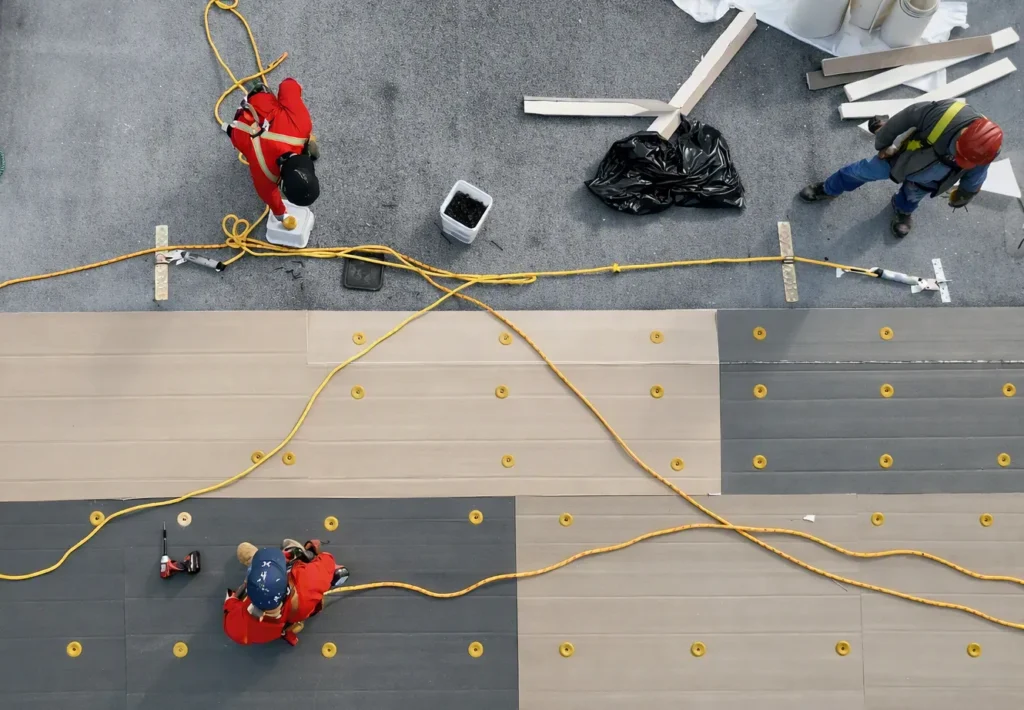
Replacing a large commercial roof turns the property into an active construction zone. Facility managers must plan for noise, material staging, restricted roof access, debris, deliveries, and temporary changes to parking or pedestrian routes. A poorly planned project frustrates tenants and disrupts daily operations.
Minimizing these problems starts with early scheduling. Late spring through September generally provides Western Washington’s most workable roofing conditions, but weather can still interrupt any exterior project.
Once on site, experienced crews control the work area and coordinate the construction sequence with building operations. They establish delivery routes, locate dumpsters and equipment, protect entrances, and maintain safe access wherever possible. This logistics planning reduces disruption and helps the business keep operating during the commercial roof replacement process.
Related Articles:
- Commercial Roof Replacement Options for Winter in Seattle
- What to Know About Seattle Commercial Roof Replacement
Secure Your Facility With Fields Roof Service
Executing this major project requires reliable partners and straight answers. Taking action before the fall storm season arrives prevents stressful emergency situations. A well-planned installation provides lasting protection against the harsh Pacific Northwest climate.
Fields Roof Service provides commercial roofing solutions that stand up to Western Washington weather. Our experienced crews conduct thorough structural inspections to give you the objective data you need. We focus on building secure, weather-tight systems that protect your business for years to come.
Contact us today to discuss your next commercial roof replacement and schedule a comprehensive site evaluation.