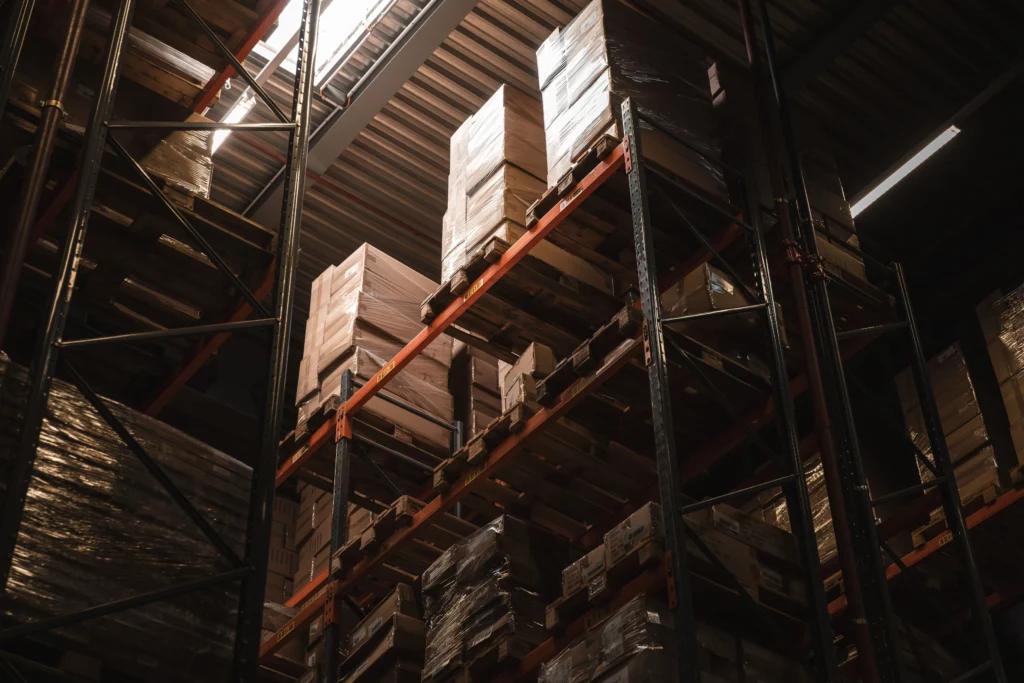
A busy distribution center cannot operate well under a compromised roof. Washington rain can exploit weak seams, flashings, and penetrations on an aging membrane, allowing water to travel through the roof assembly and eventually reach the warehouse floor. Waiting out a storm can put high-value pallets in the path of unpredictable leaks. Securing a reliable Kent roof repair service helps stop intrusion before it disrupts your shipping lanes.
How Can a Roof Leak Damage Warehouse Inventory?
A commercial roof leak can create financial liability by damaging inventory and disrupting workflows. The impact often extends beyond the first ceiling drip because of how water behaves after it breaches the building envelope.
The Warehouse Water Risk Matrix: How Commercial Roof Leaks Spread
Facility managers need to understand how water travels through a commercial building. Water entering a TPO or EPDM membrane often does not drop straight down. It can move across the metal decking, follow insulation or structural framing, and exit well away from the original exterior puncture.
That hidden movement creates three operational risks:
| Operational Risk | Physical Cause | Business Impact |
| Inventory Loss | Corrugated cardboard absorbs moisture, weakening pallet integrity. | Product damage and potential collapse of stacked materials. |
| Staff Safety | Dripping water creates slick areas on sealed concrete floors. | Slip-and-fall hazards and potential liability concerns for warehouse personnel. |
| Workflow Bottlenecks | Standing water can block travel lanes and staging areas. | Forklift operators may need to reroute, slowing fulfillment and creating congestion. |
Why Warehouse Roof Leaks Are Hard to Trace
Warehouse ceilings can mislead facility managers. A puddle in aisle four may originate from a roofing puncture over aisle two. Because commercial flat roofs have a subtle slope for drainage, water can travel along the underlying metal decking for some distance before exiting through a deck opening, ceiling penetration, or other low point below.
Finding the true exterior breach requires a trained eye. A technician may review the leak history, wind direction, and interior moisture patterns, then use targeted moisture scanning to narrow the likely roof area before repairs begin. Many commercial leaks begin at penetrations, flashings, seams, or drainage details rather than the open membrane field.
Common entry points include:
- HVAC Curbs: Vibration and service traffic around rooftop units can loosen flashing and sealant over time.
- Drainage Scuppers: Debris can clog drains, allowing standing water to back up against parapet walls and stress seals.
- Pipe Boots: Rubber collars around plumbing vents can dry, crack, or split after years of sun exposure.
Persistent moisture can degrade insulation and corrode metal decking over time. A localized puncture can worsen and affect the surrounding roof assembly if left unrepaired.
Commercial Roof Repairs Without Operational Downtime
You should not have to shut down a distribution center every time it rains. A targeted emergency patch can limit disruption by allowing crews to address the leak from the roof exterior. Your forklifts can keep moving, and your shipping bays can remain open while the repair happens overhead.
A professional patch can stop or substantially reduce active water intrusion. Commercial contractors use methods suited to the membrane and conditions, such as hot-air welding for compatible thermoplastic systems or appropriate sealants and temporary repair materials where welding is not practical. They target the loose HVAC flashing or split pipe boot rather than opening large sections of membrane during a storm.
This rapid response buys facility managers time. Instead of moving pallets and positioning catch-bins, you can protect the building envelope and plan a permanent repair, restoration, or replacement based on the roof’s condition and your budget cycle.
Related Articles:
- How to Prevent Fall Rain Damage With Kent Roof Maintenance
- Kent Roof Repair Services: Stop Early Autumn Flashing Leaks
Protect Your Assets With Fields Roof Service
Proactive maintenance keeps industrial facilities profitable. Fields Roof Service understands the logistical pressures of running a busy distribution center. We work efficiently to locate membrane punctures, flashing failures, and drainage issues on commercial flat roofs.
Our crews provide straightforward assessments of your existing roofing system. We help you weigh the practical trade-offs between a rapid emergency patch and a long-term membrane overlay. We focus on keeping the water out so you can focus on moving inventory safely and efficiently.
Contact us today to schedule your Kent roof repair service and keep your warehouse operations moving without interruption.