
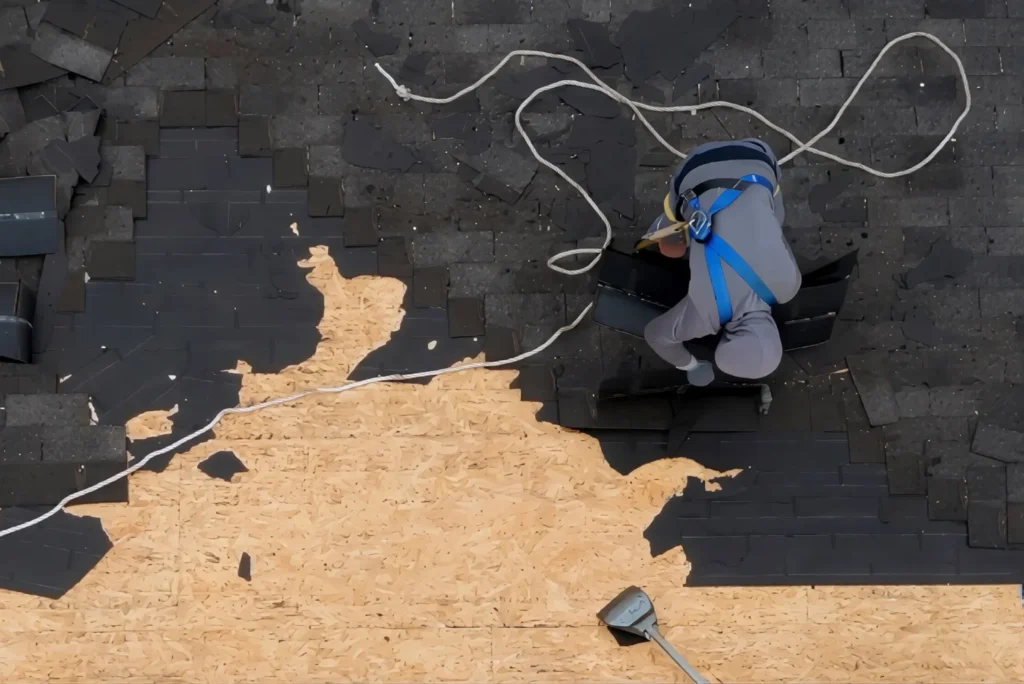
Washington winter rain and wind can expose weaknesses that remain unnoticed during dry summer weather. Every autumn, property owners consider delaying a residential roof replacement to save money, but postponement can increase the risk of leaks and more expensive repairs. Evaluate the current condition of your roofing materials. Waiting until severe weather arrives may limit repair options and allow concealed damage to spread.
How Do I Know If My Roof Can Survive One More Winter Before Needing Replacement?
Homeowners can assess winter roof readiness by looking for curling or cracked asphalt shingles, widespread granule loss in gutters, missing shingles, damaged flashing, and established moss before seasonal rain intensifies. A ground-level visual check can reveal visible warning signs, but it cannot confirm the condition of concealed underlayment or roof decking. Prompt professional evaluation is warranted when deterioration is widespread, active leaks are present, or the roof no longer appears reliably repairable.
Pre-Winter Asphalt Shingle Degradation Matrix
Pacific Northwest winter storms place extra demands on residential roofs. Homeowners should identify visible shingle damage before persistent fall rain makes repairs more difficult.
| Degradation Indicator | Structural Impact | Required Action |
| Granule Loss and Exposed Fiberglass Mat | Significant granule loss can reduce the shingles’ resistance to ultraviolet exposure and weathering. | Have a professional assess whether affected areas need repair or whether deterioration is widespread enough to justify replacement. |
| Edge Curling and Granule Bridging | Curling or poorly sealed shingles may be more vulnerable to wind, water entry, and further damage. | Contact a roofing professional to replace damaged shingles and inspect the underlayment and surrounding roof. |
| Established Moss Growth | Moss can grow around shingle edges, retain moisture, and contribute to lifting or deterioration over time. | Arrange roof-compatible moss treatment and have the shingles evaluated for lifting, cracking, and remaining serviceability. |
Why Granule Loss Can Leat to a Residential Roofing Replacement
Asphalt shingles use mineral granules to help protect the asphalt coating from ultraviolet exposure and weathering. Some granules naturally loosen over a roof’s life, especially after installation or severe weather, but persistent or heavy accumulation in gutters can signal significant surface wear. Look inside your downspout catch basins after rain. A thick or increasing layer of granules, especially with visible bald areas on the roof, justifies a professional assessment.
When granules are missing, exposed asphalt may weather faster, and the shingle can lose flexibility and surface protection. Cracked, brittle, or heavily worn shingles may allow water to reach the underlayment and roof deck. At that stage, replacement may be more practical than repeated spot repairs, particularly when similar deterioration appears across multiple slopes or the roof is near the end of its expected service life.
The Threat of Washington Moss Accumulation
Western Washington’s damp climate supports moss growth on shaded, poorly ventilated, or slow-drying roof surfaces. Moss is more than a cosmetic concern. Established growth can develop beneath shingle edges, retain moisture, interfere with drainage, and contribute to shingle lifting or deterioration. If shingles become displaced or damaged, wind-driven rain may reach the underlayment or roof deck.
Many homeowners make the mistake of aggressively power washing moss away. High-pressure water can strip protective granules, damage asphalt shingles, and shorten their service life. Safer control generally involves applying a roof-compatible treatment according to its label, followed by low-pressure rinsing or natural weathering, as appropriate for the roof and surrounding property. If moss has lifted or damaged multiple shingle sections, arrange an inspection; the required work may range from localized replacement to a complete roof replacement.
When to Repair vs. When to Replace Your Residential Roof
A few missing or damaged shingles may be repairable if the surrounding roof remains flexible and in good condition. A technician can replace them and check nearby flashing, fasteners, and underlayment for related damage.
Hardware-store caulk cannot fix widespread deterioration. Extensive curling, cracking, bald spots, repeated leaks, or multiple damaged areas may indicate that replacement is more practical. Brittle shingles can crack during repairs, so professionals assess the roof’s flexibility, granule loss, flashing, attic, and decking before deciding whether it can last another winter.
Related Articles:
- Clear Signs Your Everett Home Needs Full Roof Replacement
- Preparing Kent Homes for Winter With Shingle Roof Installation
Secure Your Home Before the Freeze
Hoping for a mild winter never stops a leak. Cold weather makes old shingles shrink, crack, and fail at the worst possible time. Taking decisive action right now keeps your living spaces warm and totally dry.
Book a professional inspection today to find out exactly where your property stands. Contact Fields Roof Service to schedule your final residential roof replacement before the harsh Washington weather destroys your interior framing.