Autumn in Washington brings frequent rain, seasonal wind, and falling leaves and pine needles onto local commercial buildings. Property managers who overlook this organic debris may face blocked drainage, roof leaks, and interior damage. Staying ahead of the weather requires proactive Puyallup commercial roofing maintenance before the wet season fully arrives.
How Do Fall Leaves and Pine Needles Damage Commercial Flat Roofs?
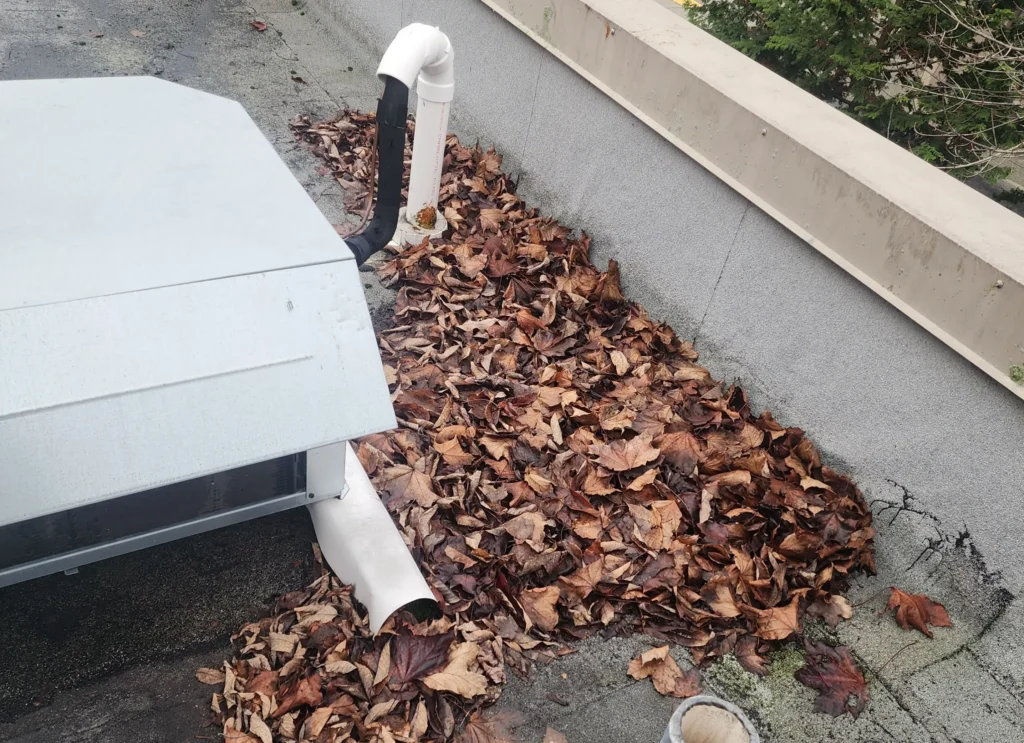
Accumulated leaves and pine needles can obstruct scuppers and drains on commercial flat roofs. When water cannot exit efficiently, it may collect in low areas and place additional stress on the roof membrane, flashings, insulation, and supporting structure. A flat roof depends on properly functioning drainage, adequate slope, overflow protection, and a sound roof assembly. When leaves restrict the outlet, ponding can develop instead of draining as designed.
The Puyallup Flat Roof Debris Checklist
Washington weather requires property owners to manage significant amounts of organic material. Pine needles and wet leaves create particular maintenance concerns for low-slope commercial buildings. Understanding how this debris affects drainage and roofing materials helps you prioritize early-autumn service.
1. Scupper and Drain Blockage Risks
Many commercial buildings use internal drains, roof drains, or wall scuppers to move roof water. Wind can carry dry leaves across the roof toward these drainage points. Wet pine needles and leaves may mat together over a drain grate or scupper opening, restricting water flow. If the blockage remains during heavy rain, water can collect in low areas or overflow onto walls and other building components.
2. Standing Water Weight Accumulation
Blocked outlets can quickly create standing-water problems, especially on roofs with limited slope or inadequate overflow capacity. Water weighs about 8.34 pounds per U.S. gallon. A blocked scupper or drain may allow a substantial volume of water to collect in one low area, adding load to the roof assembly. If ponding is deep, widespread, or persistent, arrange a prompt professional evaluation rather than assuming the structure can safely support it.
3. Membrane Seam Degradation
Commercial TPO and EPDM membranes are designed to protect buildings from rain, but prolonged ponding can increase stress on seams, flashings, penetrations, and other details. TPO seams are typically heat-welded, while EPDM systems may use seam tape or adhesives; the likely failure point depends on the roof system and installation. Decomposing leaves and pine needles also retain moisture and hide defects, making inspection more difficult. If a seam or flashing fails, water may enter the insulation or decking below and eventually appear inside the building.
Why Ignored Debris Ruins Commercial Roofing in Puyallup
A pile of dead leaves may look harmless on a large commercial building, but it can start an expensive chain reaction. Wet pine needles and leaves can restrict a drain or scupper, allowing water to collect in a low section of the roof. Prolonged ponding may expose weak seams, deteriorated flashing, or existing membrane damage, increasing the likelihood of a leak.
The damage may extend below the outer membrane. Commercial roof assemblies can include insulation materials. If insulation becomes saturated, its thermal performance may decline, and damaged materials may require removal and replacement. A moisture survey or targeted inspection can help a commercial roofing specialist in Puyallup determine whether the problem involves the membrane, insulation, decking, or multiple layers.
How Professionals Trace and Fix Flat Roof Leaks
Evaluating a flat roof requires more than removing visible piles of leaves. When technicians inspect a roof with ponding or interior leakage, they look for the entry path at drainage points, membrane seams, penetrations, flashings, and nearby areas. Depending on the roof system and conditions, they may use moisture testing, electronic leak detection, core sampling, or other appropriate methods.
A lasting repair requires compatible materials, proper surface preparation, and procedures suitable for the membrane system. Hardware-store caulk applied over a wet or contaminated seam is not a dependable solution for standing water.
Related Articles:
- Why Olympia Businesses Need Flat Roof Repairs This Fall Season
- How to Fix Pooling Water on Commercial Flat Roofs in Kent
Protect Your Building Before the Rains Hit
Ignoring autumn leaves leaves your building completely exposed to severe water damage. A clogged drain turns a standard rainstorm into a major structural threat. Taking action while the debris is still dry keeps your business safe and your repair costs low.
Schedule a thorough clearing and inspection before the heavy storms arrive. Professional preparation prevents minor clogs from becoming expensive interior floods.
Secure your building today by booking your trusted Puyallup commercial roofing professionals. Contact Fields Roof Service!