Summer heat and UV exposure gradually weather commercial roof membranes across the Green River Valley. As September arrives, seasonal temperature changes can put extra stress on aging sealants, flashing joints, and membrane details. Ignoring small gaps in perimeter metal before the rain arrives can lead to interior damage. Booking a Kent roof repair service before the first heavy downpour helps reduce the risk of leaks, inventory damage, and operational disruption.
What Causes Commercial Roof Leaks in Kent WA Industrial Parks During Early Fall?
Commercial roof leaks in early fall often involve aging or separated flashing, deteriorated sealants, loose fasteners, and windblown debris that restricts roof drainage during Pacific Northwest rainstorms.
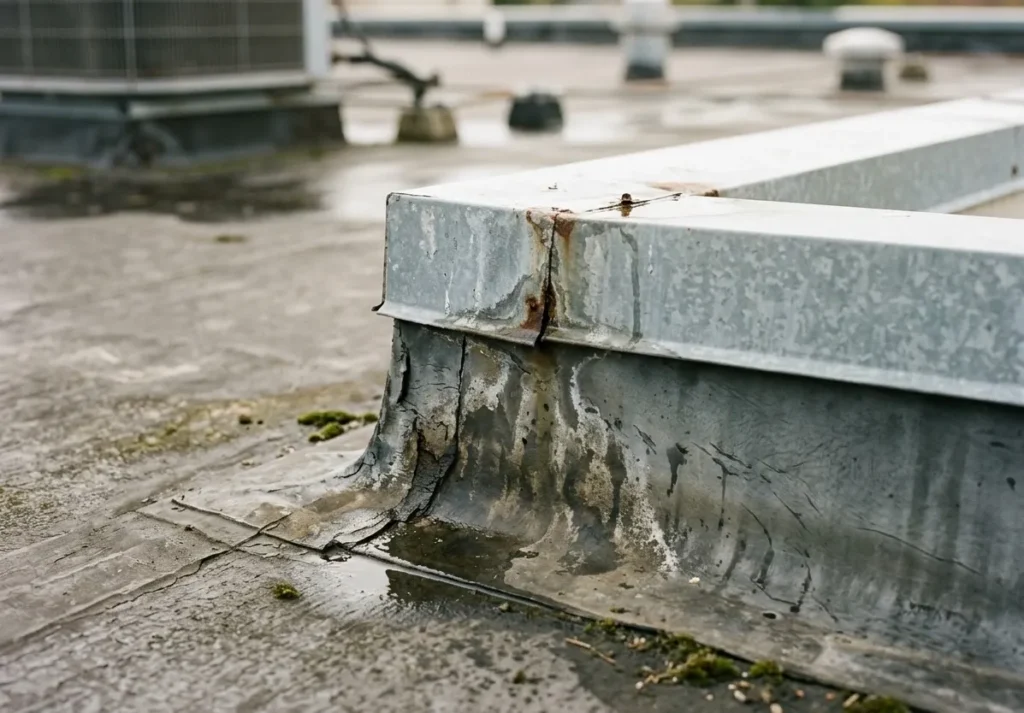
Seasonal temperature changes can place physical stress on industrial roofing systems throughout the valley. Metal flashing expands and contracts as temperatures change, and that movement can worsen existing weaknesses in joints, fasteners, and sealants. Poor detailing, corrosion, incompatible materials, and ordinary weathering can also open pathways for wind-driven rain behind parapet and roof-edge flashings.
Common Commercial Roof Flashing Problems in Kent
Early autumn inspections should focus on two common flashing and penetration problem areas on flat commercial roofs:
- Parapet Wall Flashing: Open coping joints, separated counter-flashing, corroded metal, failed sealant, or loose fasteners can allow wind-driven rain behind the wall-to-roof transition. Water may then enter the roof or wall assembly and appear on interior ceiling tiles some distance from the original defect.
- Pitch Pockets and Pipe Boots: Pitch pockets around irregular penetrations can crack, shrink, or lose their seal, while pipe boots around plumbing vents may split or separate from the membrane. These defects allow water to track around or along penetrations and eventually enter the facility.
Why Windblown Debris Multiplies Flashing Leak Risks
Trees surrounding industrial properties drop leaves and pine needles throughout the fall. Strong autumn wind gusts carry this organic matter across flat commercial surfaces, where it often collects in low spots near scuppers, gutters, and internal drains.
When a scupper clogs, rainwater can accumulate near the wall and roof-edge flashing. Flat roof membranes are designed to manage runoff, but perimeter details are not intended to remain submerged indefinitely. Ponding increases the chance of water entering separated laps, open joints, deteriorated sealants, and other weak points that may withstand ordinary rainfall but fail during prolonged storms.
Diagnostic Procedures for Early Fall Commercial Leaks
Locating the entry point of a commercial leak requires systematic diagnostic work. Water rarely drops directly beneath the original roof defect. Instead, it can travel horizontally along steel decking, insulation, vapor-retarder surfaces, or structural members before appearing on the warehouse floor. Facility managers must look beyond the visible wet spot to identify the most likely source.
Trained technicians inspect perimeter metal, parapet transitions, termination bars, penetrations, seams, and drainage points during fall evaluations. They look for open laps, lifted edges, corrosion, failed sealant, loose fasteners, and membrane separation, then use appropriate methods to evaluate accessible defects without damaging sound materials. Finding these problems early may limit moisture intrusion and reduce the chance of widespread insulation damage later in the season. Securing reliable roof repair services in Kent keeps minor perimeter leaks from becoming major building repairs.
Why Proactive September Roof Maintenance Saves Money
Delaying commercial maintenance can turn manageable defects into more expensive emergency repairs. Saturated commercial insulation may lose thermal performance, and some materials may require removal if they cannot be dried or restored. Repeated freezing and thawing can worsen existing defects when moisture remains trapped in the roof assembly, although the extent of damage depends on the roof materials and local conditions. Professional Kent commercial roofing repair addresses these vulnerabilities before colder, wetter weather arrives.
Smart facility operators schedule proactive roof cleanings and flashing inspections every September. Clearing scuppers, repairing pitch pockets, replacing damaged pipe boots, and re-securing defective termination bars takes far less time than dealing with inventory damage and interior repairs. Taking care of perimeter details improves the building’s readiness for the wet months ahead.
Related Articles:
- Why Your Roof Leaks After Heavy Rain: Seattle Leak Repair
- Kent Commercial Roof Leak Repair: Fast Emergency Service
Stop Autumn Flashing Leaks With Fields Roof Service
Managing a commercial property requires staying ahead of seasonal weather shifts. Acting before heavy autumn storms start keeps your warehouse dry and your operations running without interruption.
Fields Roof Service builds, maintains, and restores durable commercial roof systems across the Puget Sound region. We focus on the critical metal details and wall-flashing seals that keep driving rain out of your building.
Book your Kent roof repair service before the autumn storm season fully arrives. Contact Fields Roof Service today!