Summer heat can stress flat commercial roofs across the Puget Sound region. Flat roof specialists recommend a proactive approach before temperatures peak, because small problems left unchecked in spring can turn into expensive failures by late summer. Here is what facility managers and building owners should know to keep their roofs in good shape this season.
Keeping Your Flat Building Safe in the Heat
Summer sun causes flat roof membranes to warm during the day and cool at night. This daily thermal cycling can stress seams and flashings over time, potentially pulling apart adhesive bonds and creating vulnerable gaps.
Once gaps form, any water from rain or poor drainage can seep in and accelerate the damage. Poor drainage can also cause ponding water, which adds stress to the membrane. A roof that appeared fine in the spring can develop blisters, cracks, or lifted edges by late summer. Catching these issues early often requires only a targeted repair, whereas ignoring them may lead to costly interior water damage.
Prolonged UV exposure can also break down roofing materials over time, making them brittle and less able to withstand foot traffic or severe weather. Scheduling a professional assessment of your membrane, flashings, and drainage systems before the peak of summer can often protect your building from unexpected and expensive surprises.
The Flat Roof Membrane Blister Test
Blisters and soft spots are among the earliest signs that a flat roof membrane is failing. Understanding these common warning signs can help you know when it is time to call a professional:
-
Spongy areas: Moisture trapped beneath the membrane can create soft or bouncy spots on the roof. As this trapped moisture heats up and turns to vapor, pressure builds and can cause the roofing material to separate from the underlying structure.
-
Raised bubbles: Blisters often appear as dome-shaped bumps on the roof’s surface. They form when air or moisture gets trapped between the membrane layers. While small blisters may not leak right away, they can expand over time and eventually rupture.
-
Cracking edges: The seams where the membrane meets walls, curbs, or pipes are highly vulnerable. Cracking or peeling at these edges often indicates that the seal is breaking down, making water intrusion much more likely.
Because walking on a compromised roof can easily worsen the damage and pose a serious safety hazard, it is highly recommended to stay off the roof yourself. Contact a qualified commercial roofing contractor for a safe and thorough evaluation.
Simple Summer Upkeep Steps
Routine attention can often prevent major issues. Local flat roof specialists note that many problems stem from neglected maintenance rather than defective materials. While staying off the roof yourself is the safest choice, you can protect your investment by keeping a seasonal maintenance log. Tracking professional inspection dates, findings, and repairs can help roofers identify wear patterns and may also support future warranty claims.
Clearing Leftover Spring Debris
Debris from spring storms often collects around roof drains and scuppers. Blocked drains can cause standing water to collect, increasing roof weight, speeding up membrane deterioration, and potentially leading to structural sagging over time. Flat roof specialists recommend scheduling a professional to clear drainage points periodically during the summer and after major wind events. Keeping these drains clear can often prevent significant water damage.
Checking HVAC Walkways
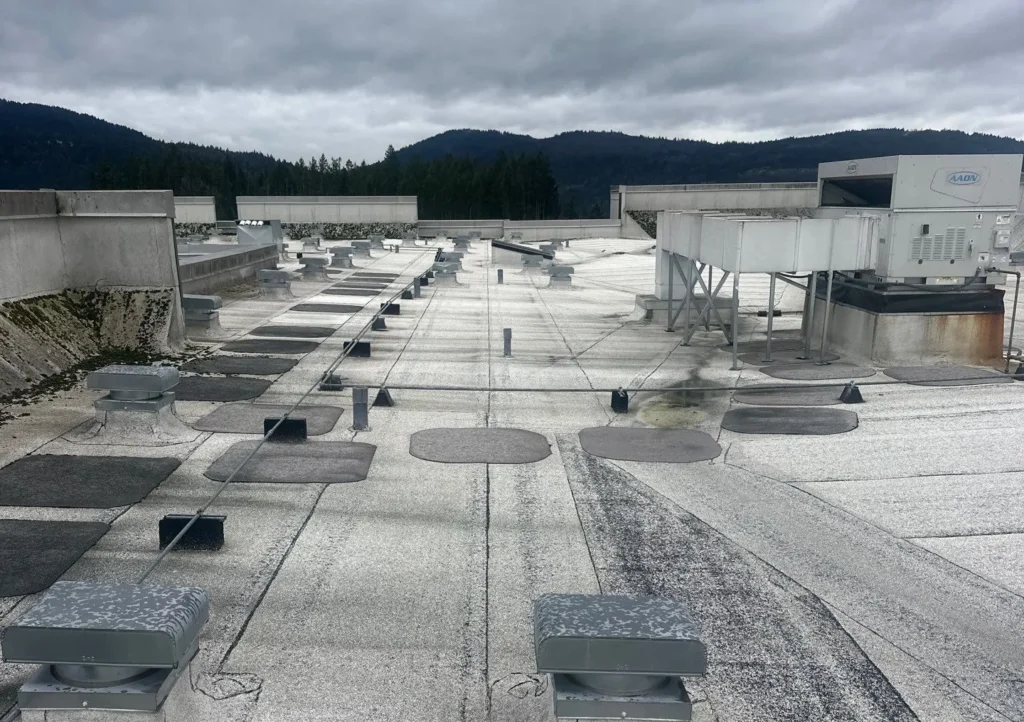
Summer is peak season for HVAC maintenance, which typically means increased foot traffic on your roof. Over time, technicians walking to and from rooftop units can wear down the membrane and increase the risk of punctures. Ensuring designated walkway pads are securely in place can help protect the surface. If pads are missing, cracked, or shifting, have a roofing professional replace them before the next HVAC service visit.
Related Articles:
Secure Your Flat Roof for Summer
Your flat roof protects everything beneath it, and intense summer heat puts it to the test. Scheduling a professional inspection now can help identify blisters, drainage issues, and membrane wear before they escalate into costly repairs.
As experienced flat roof specialists, Fields Roof Service provides comprehensive assessments of your decking, ventilation, flashing, and overall membrane integrity. Our proactive approach helps ensure your commercial roof is fully prepared to safely handle the hottest months of the year.
Do not wait for minor wear to become a major disruption. Schedule a professional summer roof evaluation today to help maintain reliable building protection.