A flat or low-slope roof on a commercial building takes a beating from rain, wind, and UV exposure year after year. In the Pacific Northwest, where moisture is relentless, the membrane covering that roof has to perform without fail. Choosing the right rolled membrane system and the right single ply roofing contractors in Everett can make a major difference in long-term roof performance and water protection.
Understanding Flat Building Materials
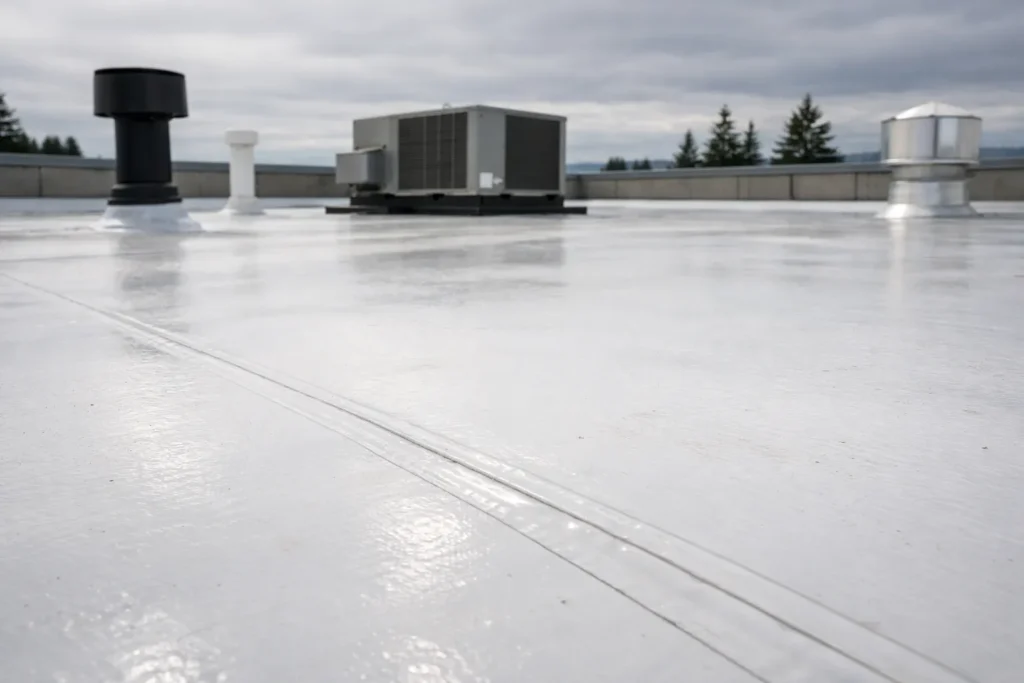
Rolled membrane systems are common for commercial flat roofs across the country, and Everett is no exception. These systems use large sheets of flexible material that are rolled out across the roof deck, overlapped at the edges, and sealed to form a continuous waterproof barrier. Unlike shingles, which rely on gravity and overlap to shed water, membranes create a single, bonded surface that handles standing water and pooling, which is common on flat roofs.
Three of the most common commercial roofing materials are TPO, PVC, and EPDM. Each has different strengths depending on the building’s use, budget, and local climate conditions. Understanding the differences helps building owners have better conversations with their contractor and avoid paying for a system that doesn’t match their needs.
Single Ply Roofing Glossary
-
TPO (Thermoplastic Polyolefin): A white or light-colored membrane known for reflecting sunlight and reducing cooling costs on commercial buildings.
-
PVC (Polyvinyl Chloride): A durable thermoplastic membrane with strong resistance to chemicals, grease, and fire, making it a top pick for food-service buildings.
-
EPDM (Ethylene Propylene Diene Monomer): A synthetic rubber membrane valued for its flexibility, long lifespan, and ability to handle temperature swings without cracking.
Comparing Popular Flat Systems
All three materials can last 20 to 30 years with proper installation and maintenance, but each one fits certain situations better than others. Experienced single ply roofing contractors in the Everett area will assess your building’s specific exposure, foot traffic, and mechanical equipment before recommending a system.
The Benefits of TPO
TPO has a light-colored surface that reflects solar heat, which can reduce cooling energy costs by a noticeable margin during warmer months. It’s also one of the more affordable membrane options, which makes it attractive for warehouse owners, office buildings, and retail spaces. TPO welds cleanly with hot air, creating strong seams that resist wind uplift and water intrusion. For most standard commercial buildings in Everett, TPO hits a good balance between cost and performance.
When to Choose PVC or EPDM
PVC is a popular choice for restaurants, commercial kitchens, and manufacturing facilities where grease, oils, or chemical fumes vent through the roof. Those substances break down other membrane types over time, but PVC handles them well. It costs a bit more than TPO, but the chemical resistance pays for itself in buildings with heavy exhaust output.
EPDM takes a different approach. This rubber-like material is usually black, so it absorbs heat rather than reflecting it. That’s actually useful in colder climates or for buildings that spend more on heating than cooling. EPDM is extremely flexible and handles the freeze-thaw cycles of a Pacific Northwest winter without becoming brittle.
Why Installation Quality Matters
A membrane is only as good as the crew that installs it. Improper installation is a leading cause of early flat roof failure, with seams and flashings being the areas where mistakes happen most often.
Creating Watertight Seams
Professionals use specialized heat-welding equipment to fuse the overlapping edges of TPO and PVC sheets into a single bonded layer. The temperature, speed, and pressure of the weld all need to be precise. Too much heat burns through the membrane; too little leaves a weak bond that peels apart. EPDM seams use adhesive or tape systems instead of heat, and those require clean, dry conditions to bond properly.
Meeting Local Building Codes
Everett has specific building codes for drainage, wind resistance, and fire ratings on commercial roofs. A qualified contractor handles permit applications, ensures the system meets local requirements, and schedules inspections. Skipping this step can result in fines, voided insurance, or a roof that doesn’t pass inspection after a claim.
Related Articles:
-
Bellevue Commercial Roofing: Single-Ply vs. Modified Bitumen
-
Late-Fall Maintenance Tips for Kent Commercial Single-Ply Roofs
Partner With Trusted Local Experts
Your flat roof protects everything underneath it: inventory, equipment, employees, and revenue. Choosing the right membrane system and the right Everett single ply roofing contractor is one of the smartest investments a building owner can make.
Fields Roof Service specializes in membrane installation for commercial and industrial properties throughout Western Washington. Reach out today to schedule a roof assessment and get a system recommendation tailored to your building.