
Washington winters bring heavy rain followed by sudden freezes. That swing creates a demanding environment for commercial building exteriors.
To stop winter leaks, you need to understand how ice affects commercial flat roofing. Knowing where freeze-thaw stress develops helps you protect your building before water finds a way inside.
How Does Freezing Weather Damage Commercial Flat Roofs?
Freezing weather damages commercial flat roofs through repeated freeze-thaw cycles. Trapped water freezes, expands, and stresses membrane seams, flashings, and other vulnerable details; when it thaws, that moisture can enter through weakened areas.
This cycle does not need to tear apart an intact roof to cause trouble. It exploits the weak points that already exist. Here is how that winter roof failure typically develops:
1. Water Pooling and Freezing
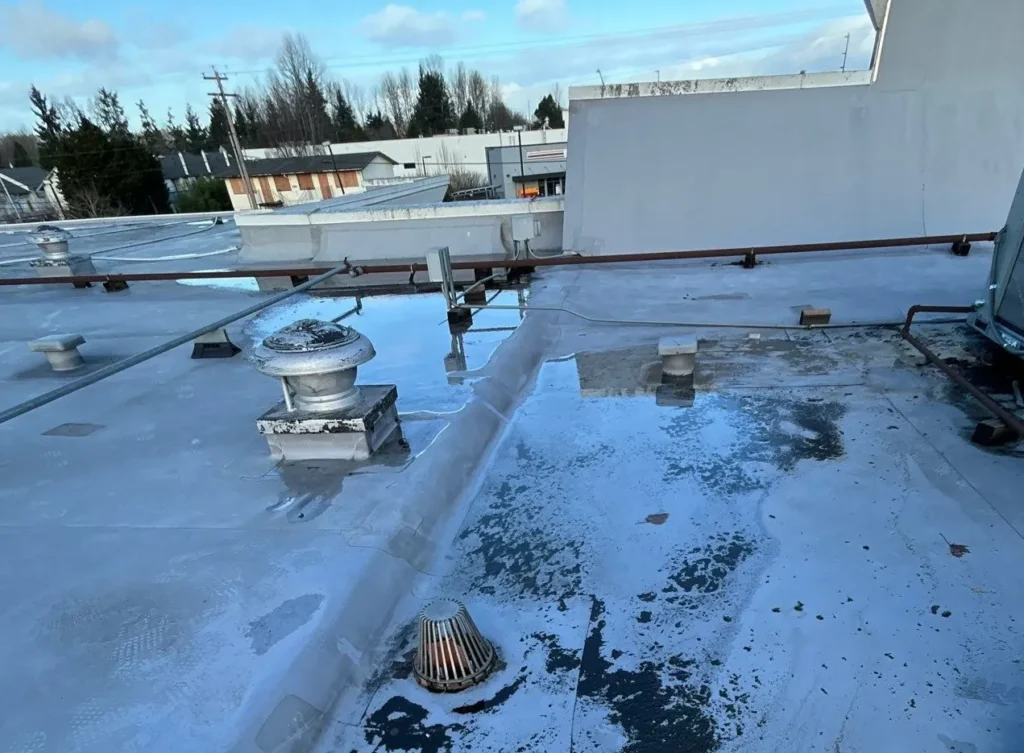
Commercial roofs rely on subtle slope to move rainwater toward internal drains and scuppers. Fall storms blow wet leaves and debris onto the roof, which can block those drainage points. When drainage slows, melted snow or rain collects in low areas as ponding water.
Over time, ponding can worsen where insulation has compressed, the deck has deflected, or the roof lacks positive slope. As Washington temperatures fall overnight, that trapped water freezes. Ice now sits across seams, flashings, and other vulnerable parts of the membrane system.
2. Ice Expansion and Seam Tearing
Water expands as it freezes. In an open puddle, the surface simply rises, but where water is confined in a seam gap, flashing detail, puncture, or defect, that expansion can create significant localized force.
Cold temperatures can also reduce flexibility in certain membranes, sealants, and adhesives. Repeated expansion and contraction then work against aging seams and flashing bonds. Rather than ripping apart a sound roof instantly, ice gradually widens small openings and turns minor weaknesses into leak paths.
3. Thaw Infiltration and Required Patching
The visible damage often appears when temperatures rise again. As ice melts, water can enter through seams, flashings, or membrane defects that freeze-thaw cycling has stressed or opened.
From there, moisture may saturate insulation, travel across the deck, and eventually show up as ceiling stains or active interior leaks. Stopping that intrusion calls for a professional inspection and a repair method suited to the membrane, the damaged detail, and the weather conditions.
How to Prevent Freeze-Thaw Damage on Your Commercial Roof
A durable membrane is only part of the answer. Freeze-thaw damage usually begins where water collects or where a small defect goes unaddressed.
The best defense is to remove standing water and correct weaknesses before winter. You can protect your building with a few proactive steps:
- Schedule Professional Drainage Maintenance: Have a qualified commercial roofing contractor clear and inspect internal drains, scuppers, gutter outlets, and drain strainers before winter. Removing accumulated leaves and debris reduces blockages and limits the standing water that freeze-thaw cycles can exploit.
- Address Persistent Ponding Promptly: Ask the contractor to verify that water flows freely after maintenance. Ponding that remains after rainfall can point to blocked drainage, inadequate slope, or another roof condition requiring professional evaluation and repair.
- Seal Minor Seam Gaps: Have a professional inspect the membrane before winter. Repairing a small seam or flashing issue in November is far easier than dealing with a leak after repeated freeze-thaw cycles.
- Protect Thermal Efficiency: Keeping the membrane watertight helps protect the insulation beneath it. Dry insulation performs better, supporting more consistent interior temperatures and heating costs through winter.
Proactive roof management keeps your business running smoothly. Addressing drainage and minor defects before the cold arrives gives you more control over maintenance costs and reduces the risk of unexpected interior leaks.
Related Articles:
- Signs Olympia Commercial Roofs Need Repairs Before Winter
- Winter Challenges for Seattle Commercial Roofs & Roofer Help
Prevent Freeze-Thaw Damage With Fields Roof Service
Managing a commercial building in winter means staying ahead of the ice. Catching a blocked drain or a stressed membrane seam today prevents an expensive interior restoration tomorrow. You need trained experts to walk the surface, clear the drainage points, and secure vulnerable joints before the freezing cycle locks in.
Fields Roof Service performs thorough winter preparations for local businesses. We locate hidden vulnerabilities and apply durable fixes that withstand severe weather.
Call us today to secure your commercial flat roofing before the next storm hits.